How to Choose Kitchen Countertops That Elevate Your Entire Space
A kitchen countertop is more than a surface for chopping and coffee mugs; it sets the tone for the whole room. When we pick the right material, color, finish and edge detail, the space feels intentional, livable and even a little luxurious. At the same time, countertops must stand up to daily life, from hot pans to inevitable spills, so our choice has to balance beauty with real-world durability and upkeep.
In this guide we’ll walk through everything that matters—how to match countertops to your kitchen’s style and needs, what each popular material brings to the table, and how color, pattern and finish shape the mood. We’ll also break down durability, installation and maintenance, explore eco-friendly options, and help you weigh upfront costs against long-term value so we can confidently choose a countertop that truly elevates the entire space.
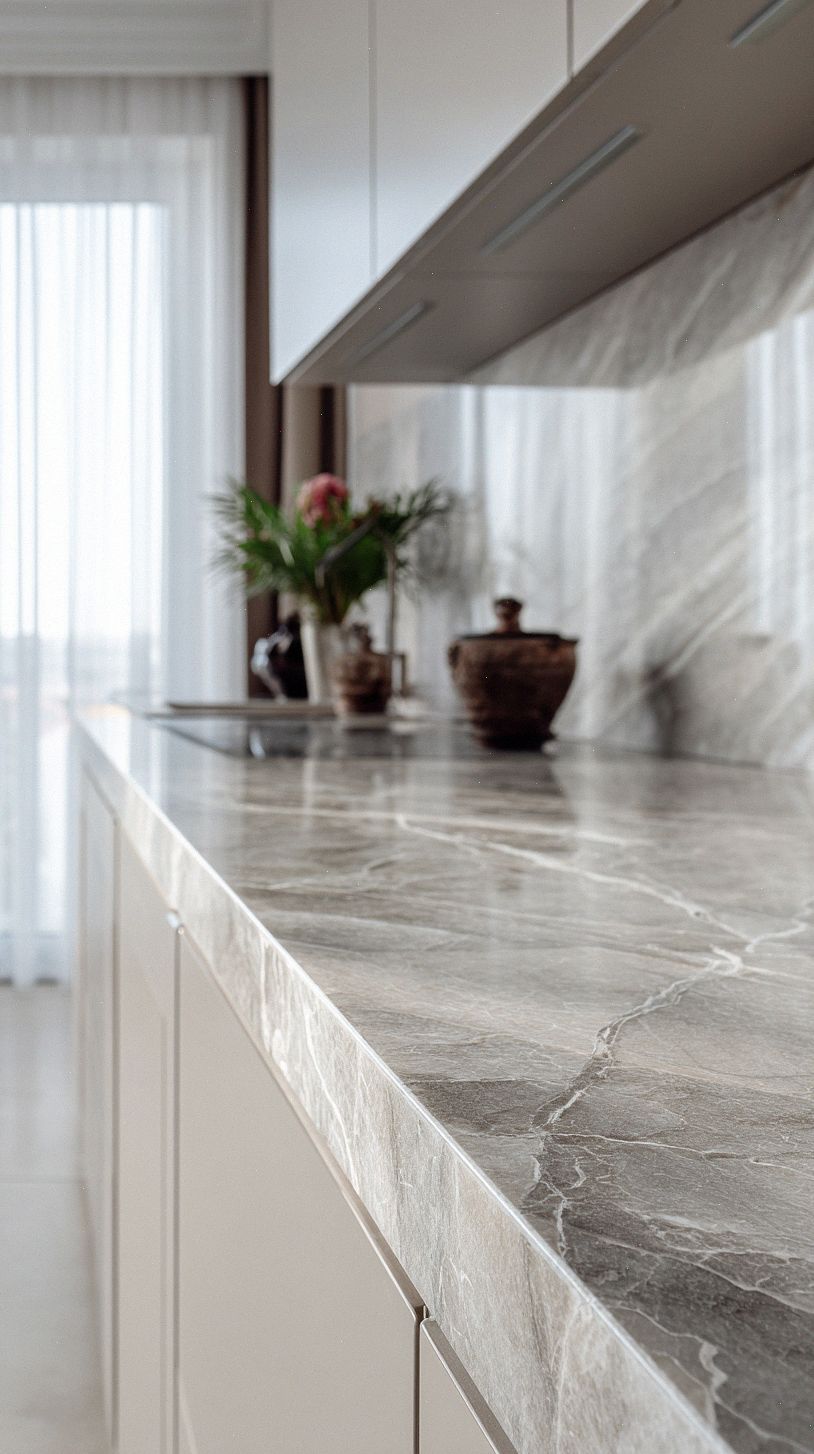
Start with Your Kitchen’s Style and Daily Needs
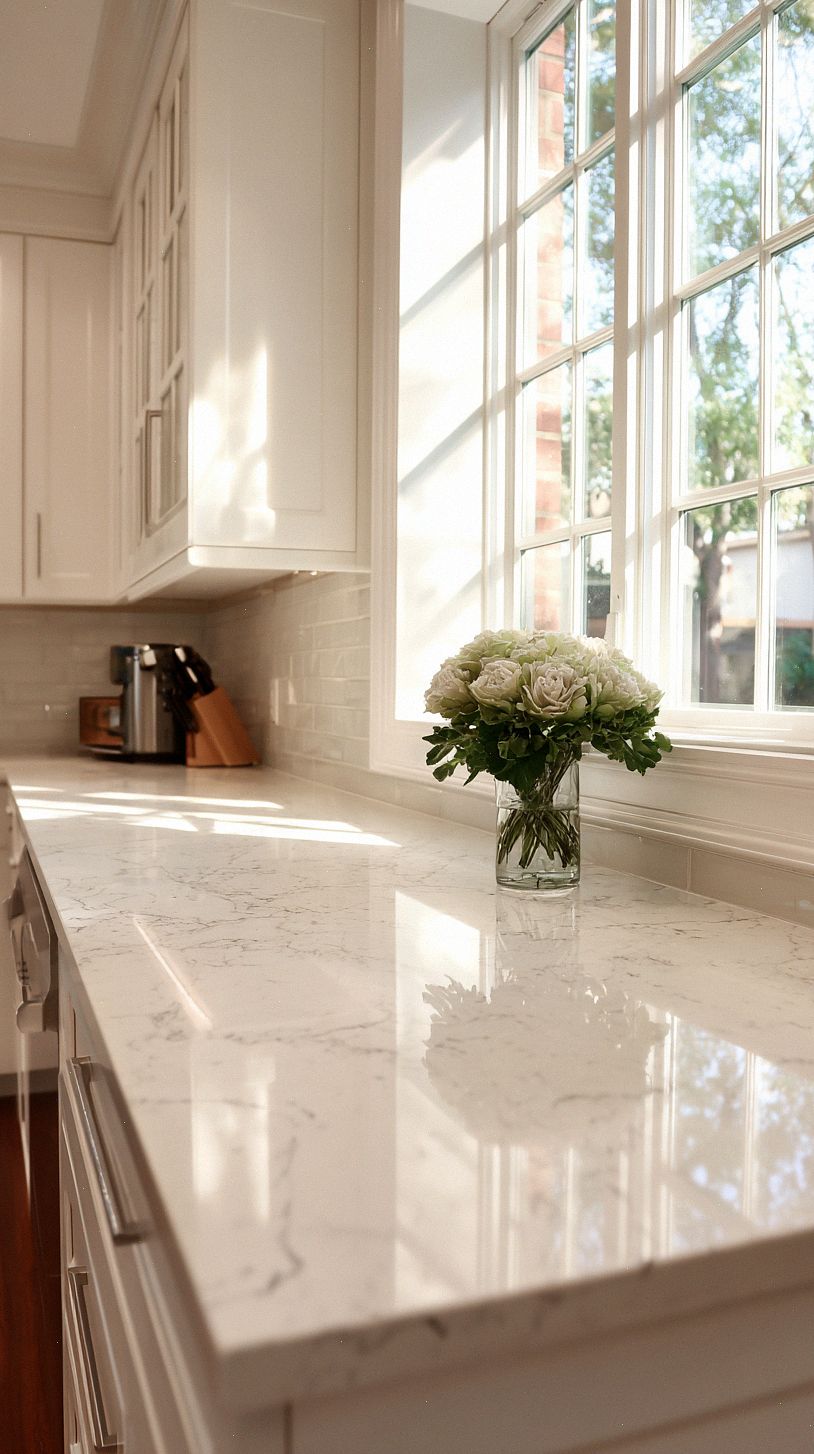
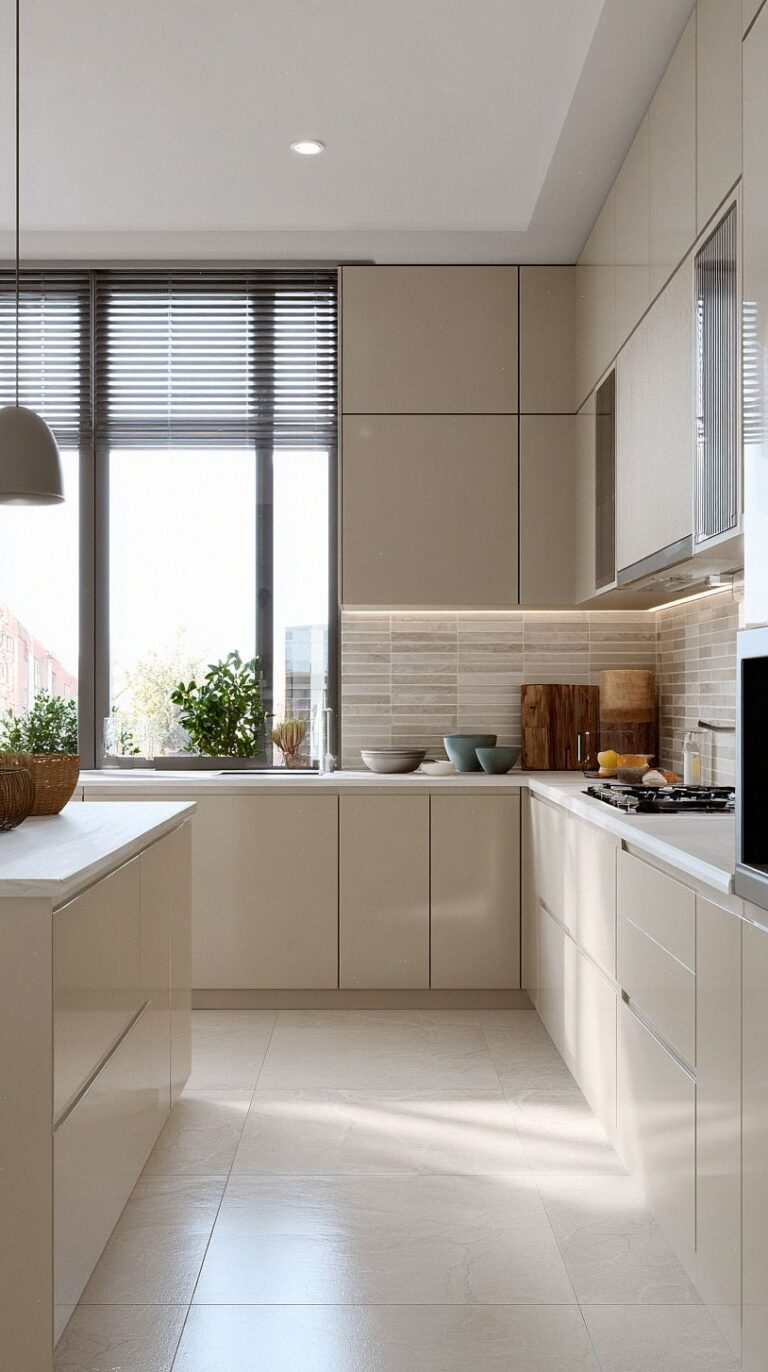
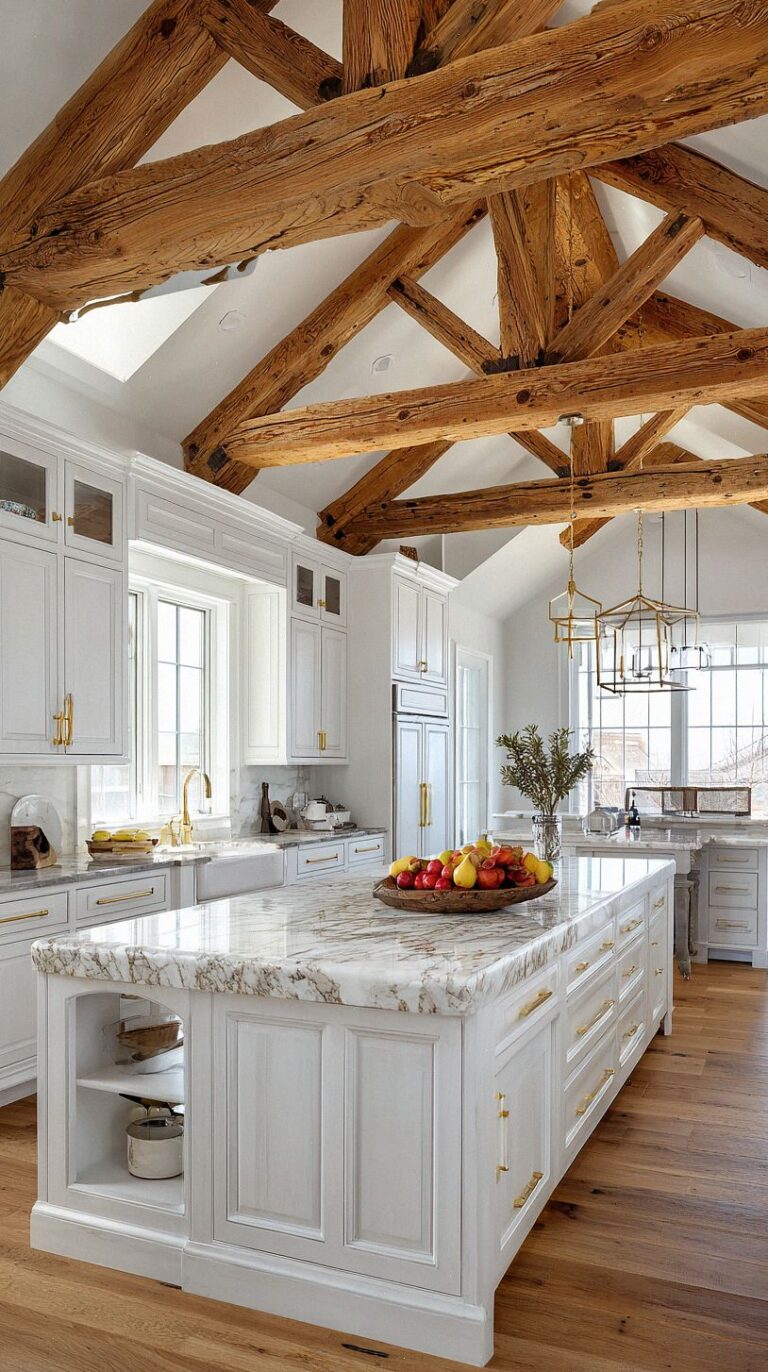
Before you get lost in slabs and samples, think about how you want your kitchen to feel and look. Are you after a sleek modern vibe, warm farmhouse charm, or a timeless classic? Pick a countertop that complements your cabinets, backsplash, and flooring so the whole room reads as one cohesive space rather than a collection of competing finishes.
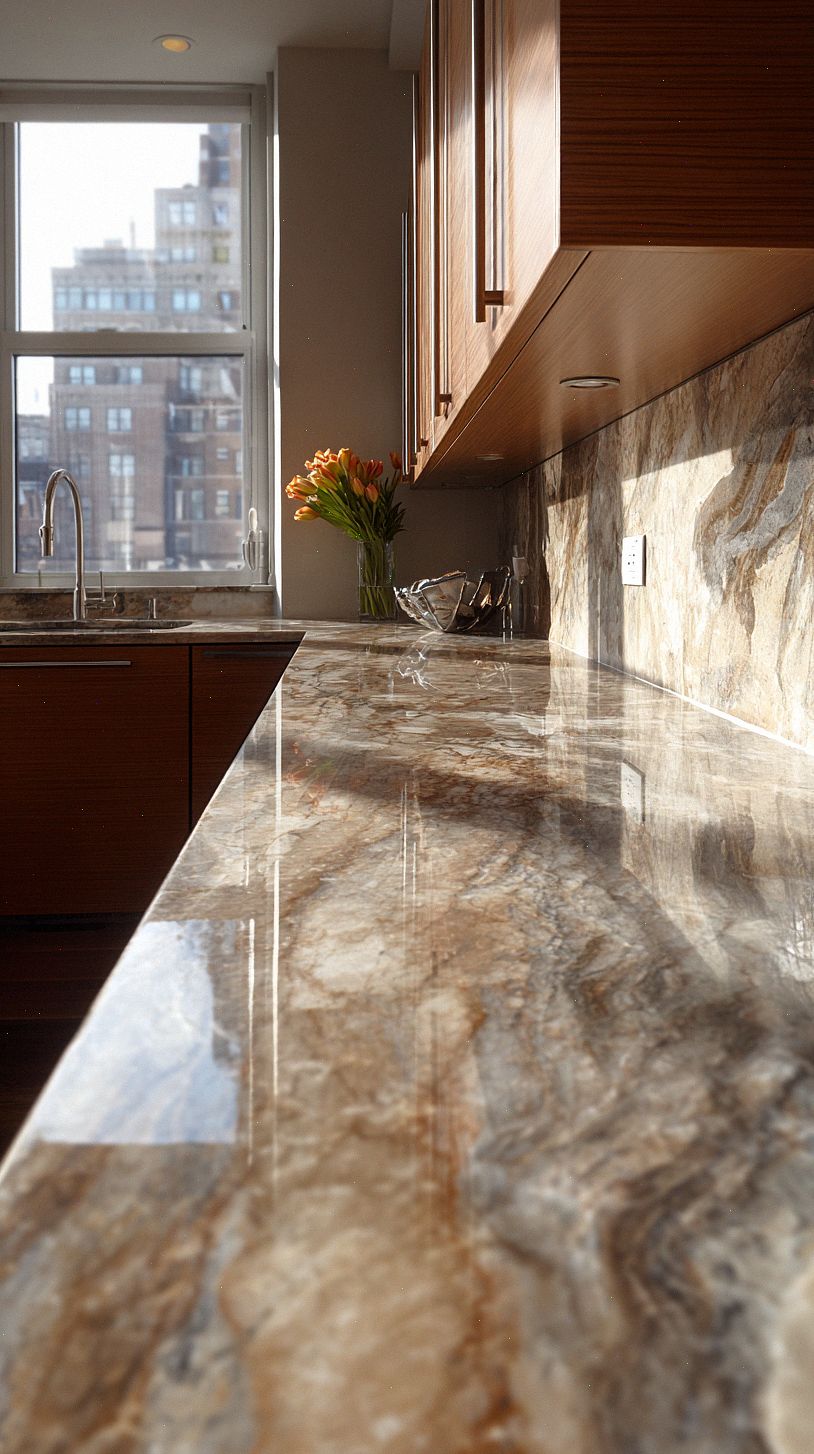
Now match that style to how you actually use the room. If you cook every night, have kids, or entertain often, prioritize durability, stain resistance, and easy maintenance over a delicate look; if your kitchen is mostly for show, you can lean into higher-maintenance materials. Consider heat and scratch resistance, how often you want to seal or clean, and the edge profile that fits both safety and style.
Popular Countertop Materials and What They Bring
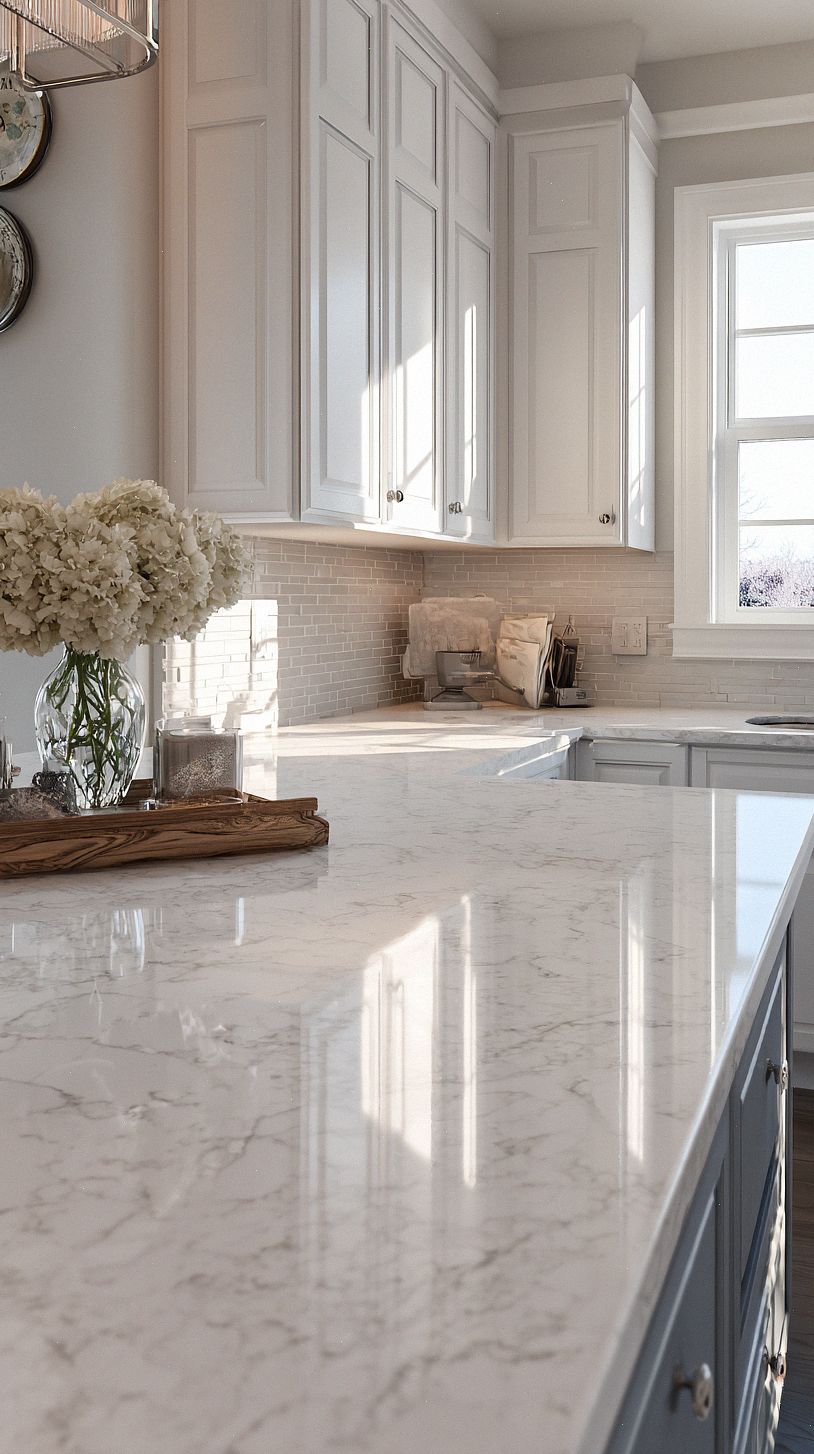
If you want a mix of style and practicality, quartz is your friend: nonporous, stain resistant, and available in consistent patterns so you get a predictable look without constant upkeep. Natural stones like granite give you unique veining and excellent heat resistance but require occasional sealing, while marble brings timeless luxury and dramatic veining at the cost of being softer and more prone to staining and etching.
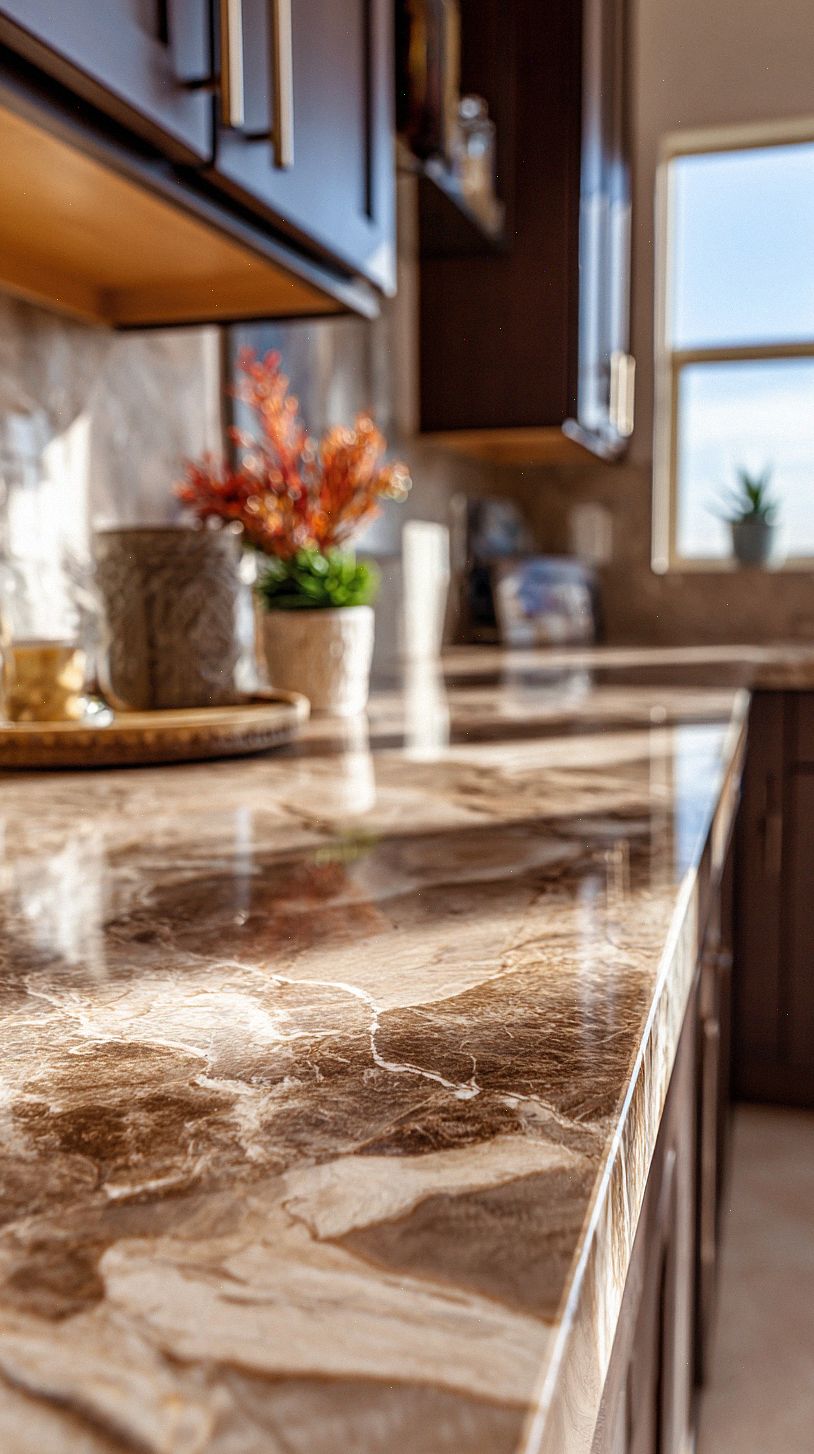
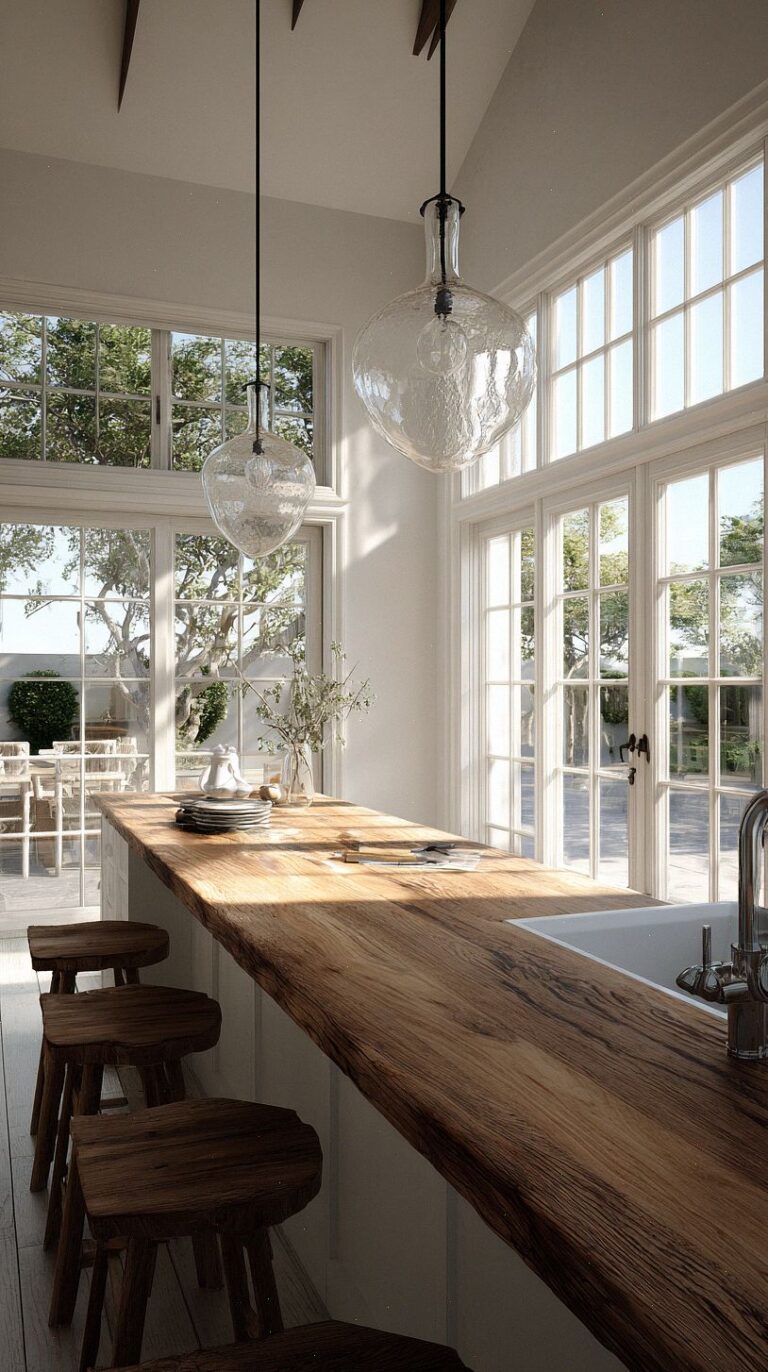
For personality and budget flexibility, butcher block adds instant warmth and can be sanded back if it gets nicked, while laminate mimics pricier materials at a fraction of the cost and is easy to maintain. Concrete and stainless steel let you lean into an industrial or professional kitchen vibe—concrete is endlessly customizable but may need sealing, and stainless is heat friendly and hygienic though it can scratch—soapstone meanwhile offers a low-maintenance, subtly aging surface if you want something understated and durable.
How Color, Pattern and Finish Elevate the Mood
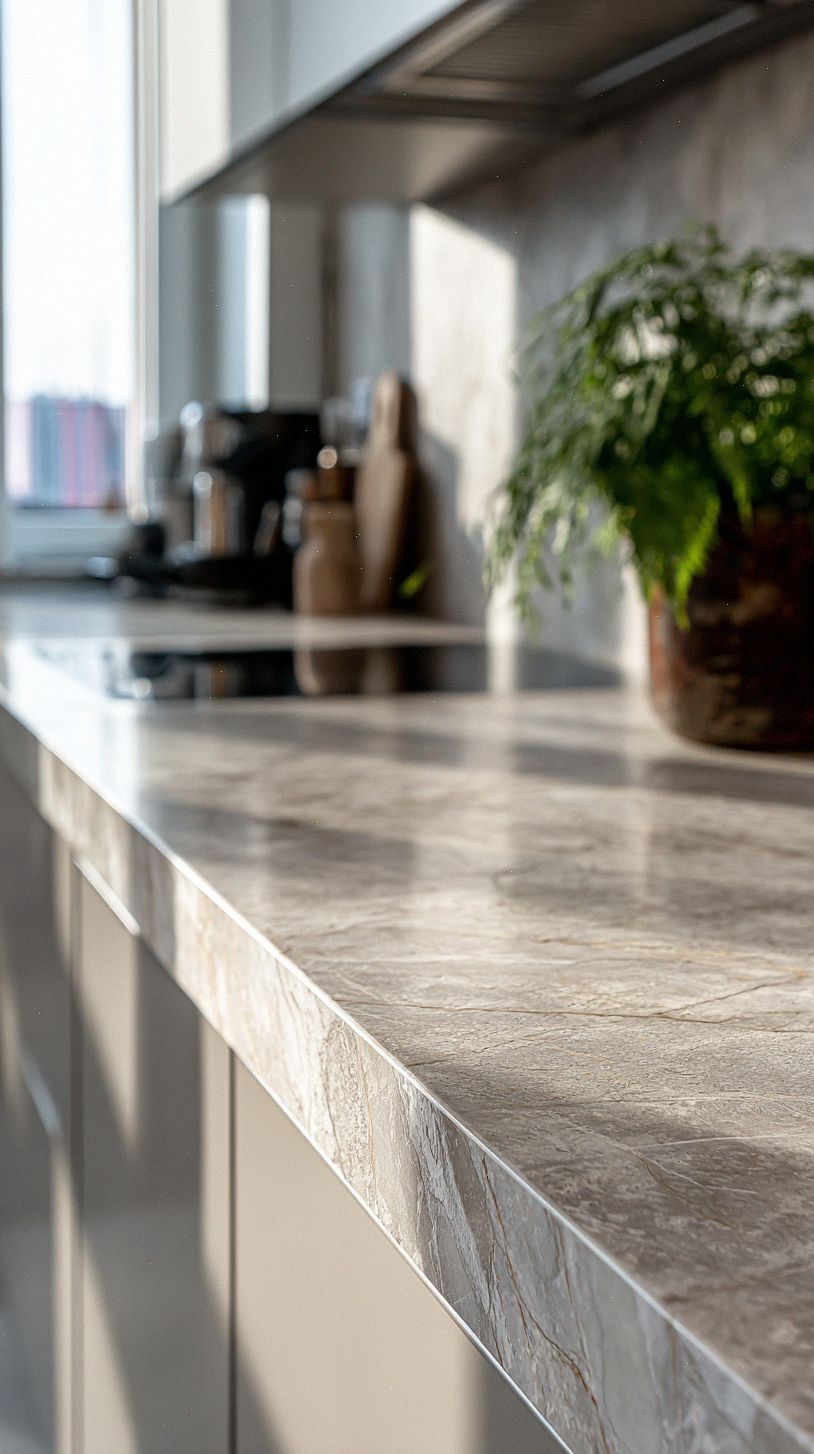
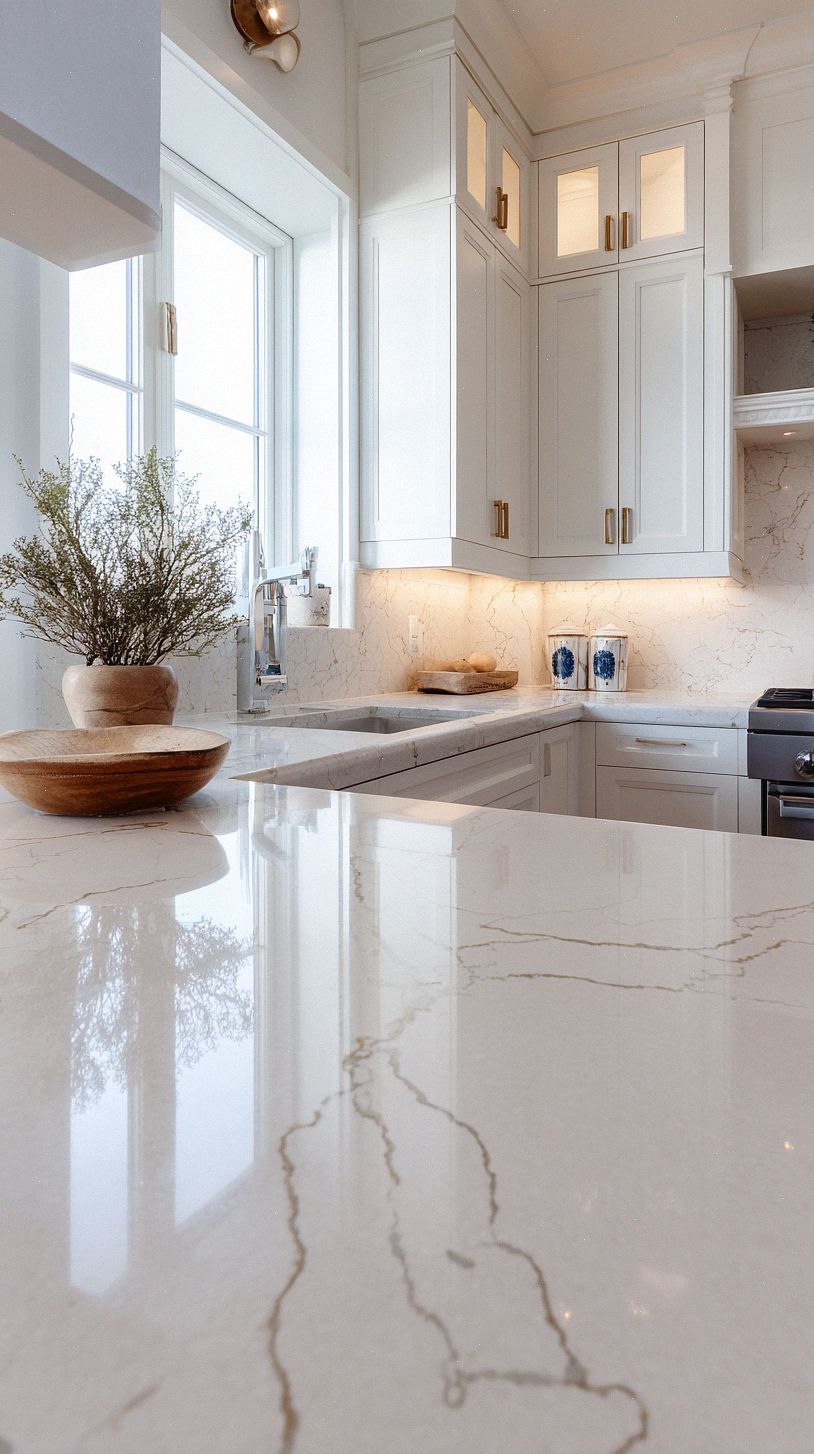
The color you choose sets the emotional tone of the whole room: warm creams and beige feel cozy and inviting, cool grays and blues read modern and calm, and deep blacks or greens add drama and sophistication. Pattern gives energy and personality, from soft, subtle veining that keeps the look serene to bold movement that becomes the room’s focal point; think about scale so a busy pattern doesn’t overwhelm a small kitchen, and use contrast with cabinets and backsplash to create balance.
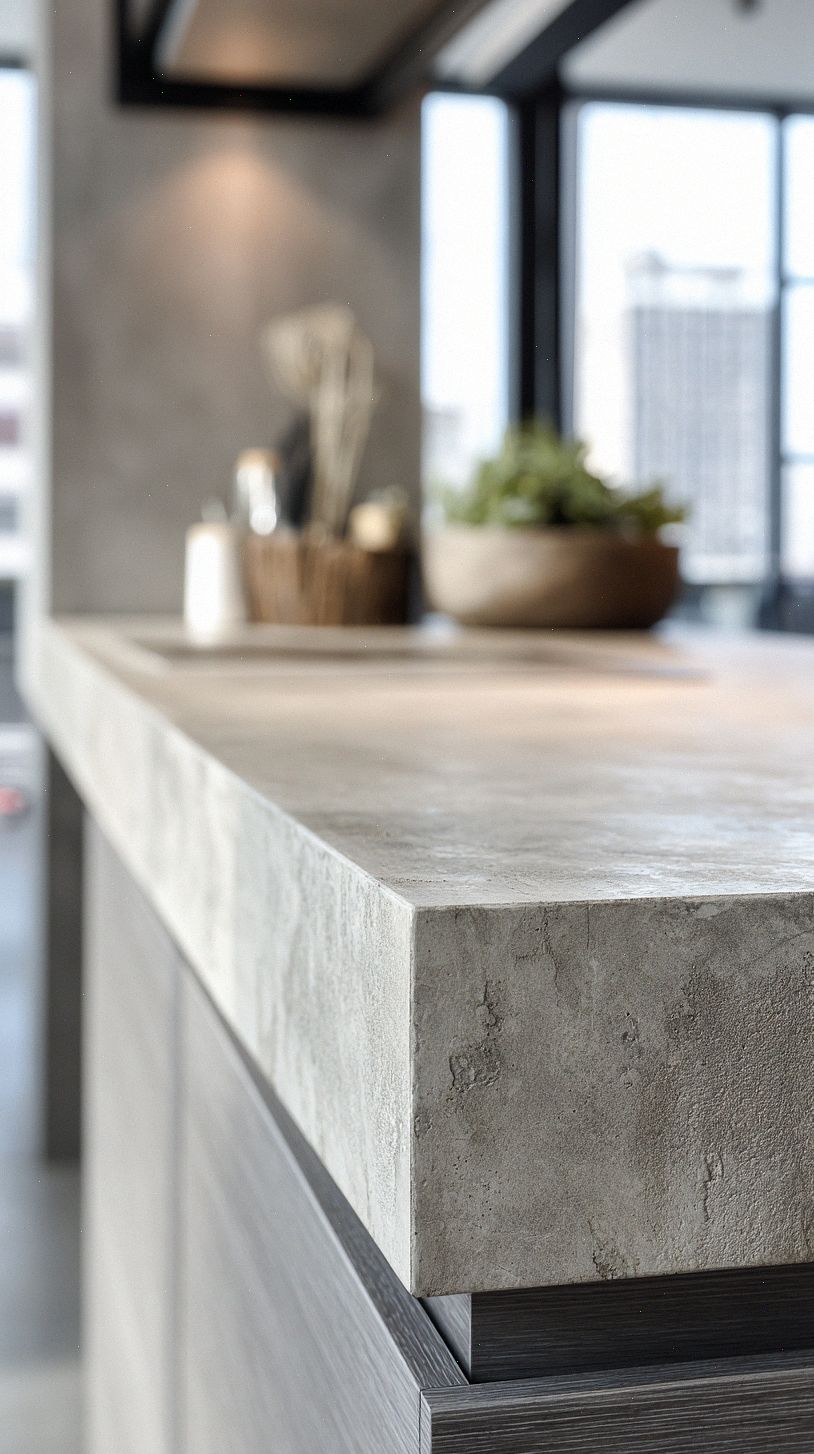
Finish changes how that color and pattern feel under light and to the touch. Polished surfaces reflect light and make the room feel brighter, while honed or matte finishes soften glare and hide fingerprints; textured or leathered finishes add tactile warmth and help mask wear. Consider how much daily maintenance you want and how your lighting interacts with the surface so the finish supports both mood and lifestyle.
Durability: Heat, Stain and Scratch Resistance Explained

Different materials handle heat and stains in very different ways, so think about how you use your kitchen before you choose. Granite and porcelain tolerate hot pans better than quartz, which can be damaged by sudden high heat because of its resin content, while laminate and wood will scorch more easily. For stains, nonporous surfaces like quartz resist spills and are low maintenance, whereas marble and other porous stones need regular sealing and quick cleanup to avoid marks and etching from acidic foods.
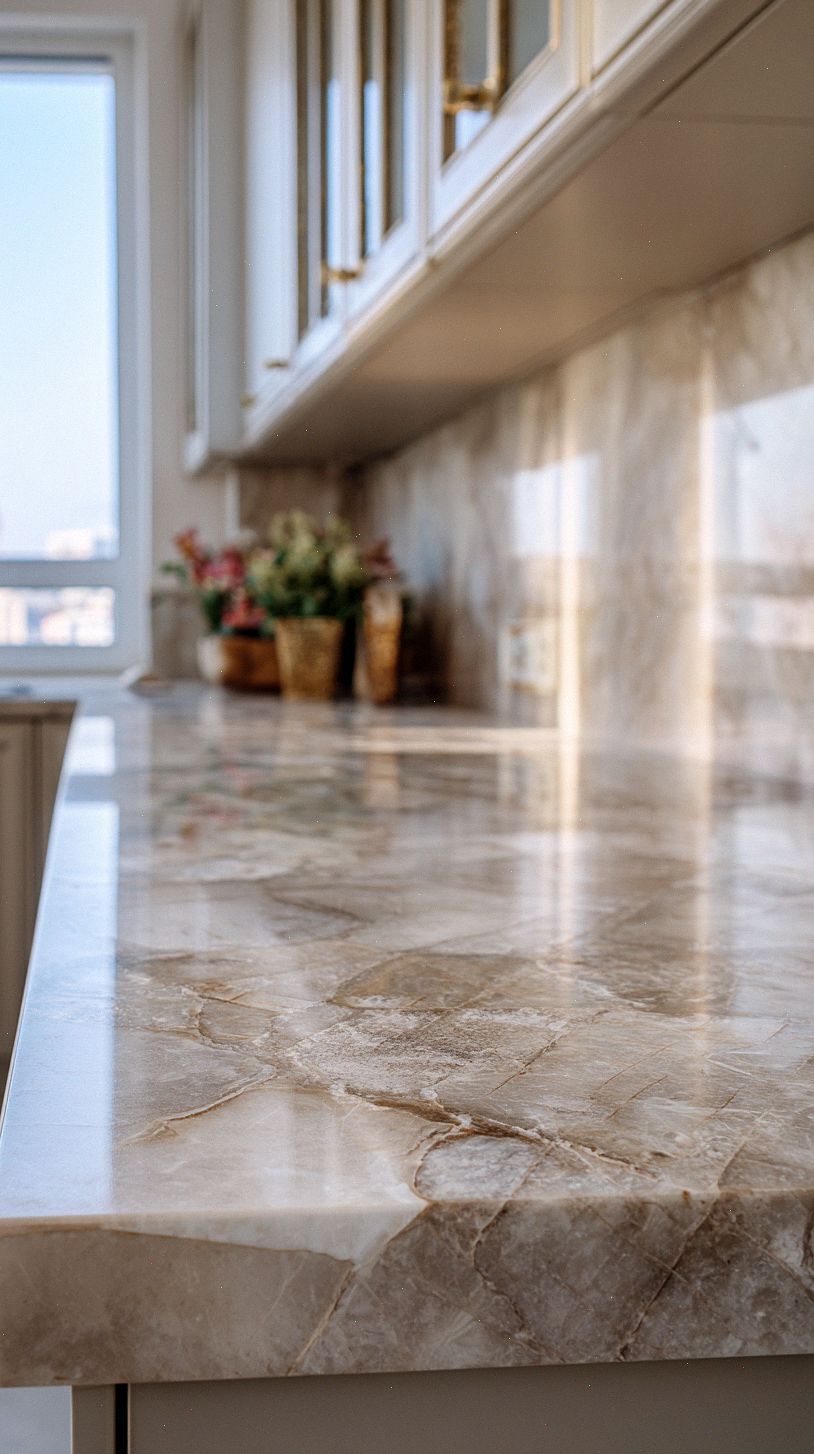
Scratch resistance comes down to material hardness and how forgiving you want your surface to be. Quartz and granite are tough and resist scratches from everyday use, but no countertop is completely indestructible so you should still use cutting boards to protect both knives and the surface. Softer options like butcher block or laminate will scratch more but can often be repaired or refinished, so weigh durability against the look and upkeep you are willing to accept.
Edges, Thickness and Details That Create Impact
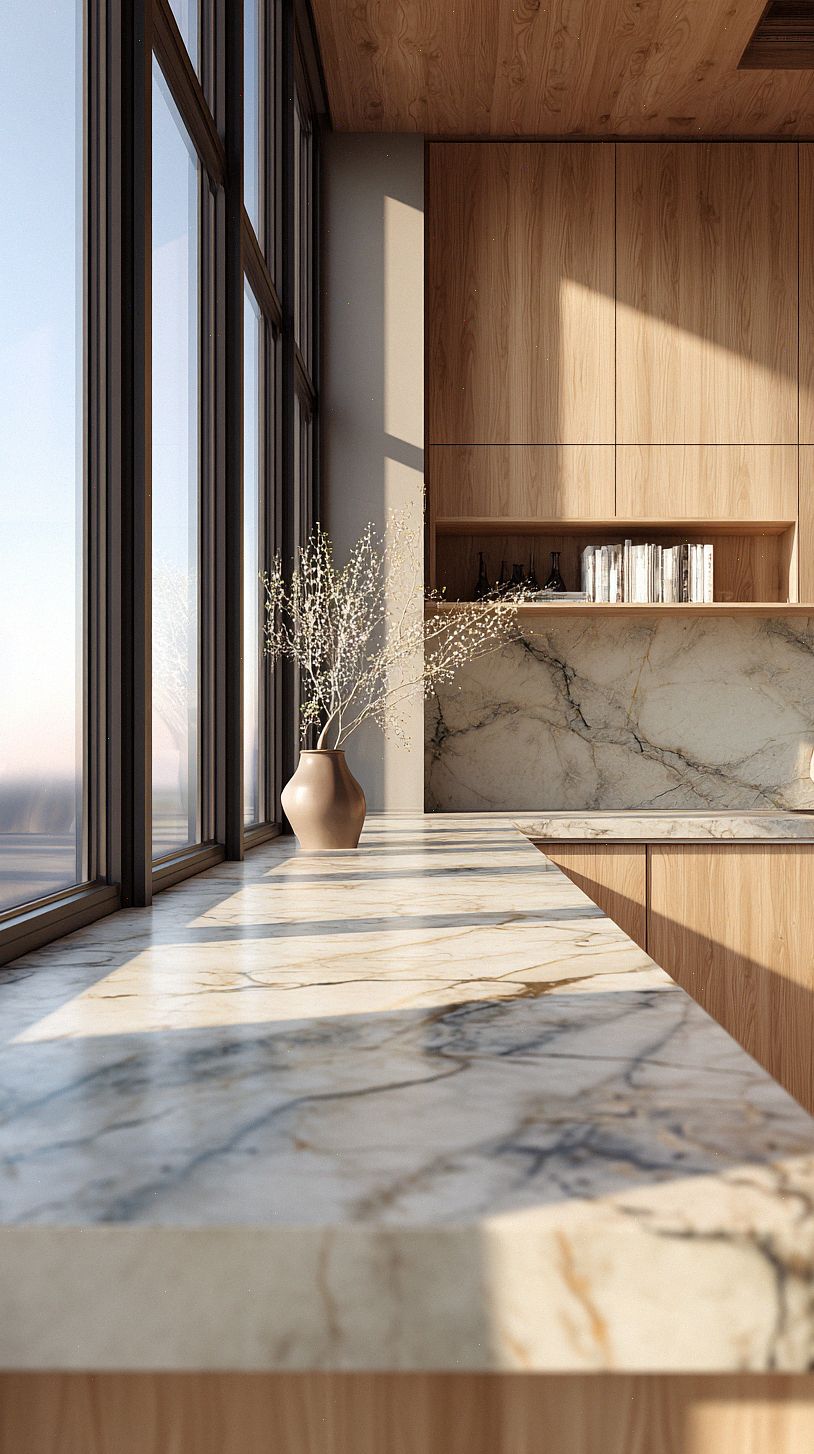
The edge profile and thickness you choose can change the whole vibe of your kitchen. A thin, square edge reads modern and minimal, while a thicker, eased or bullnose edge feels more traditional and substantial. Think about how you use the space too: rounded edges are friendlier for kids and traffic, and mitered or stacked edges can make a slim slab look luxuriously thick without the cost.
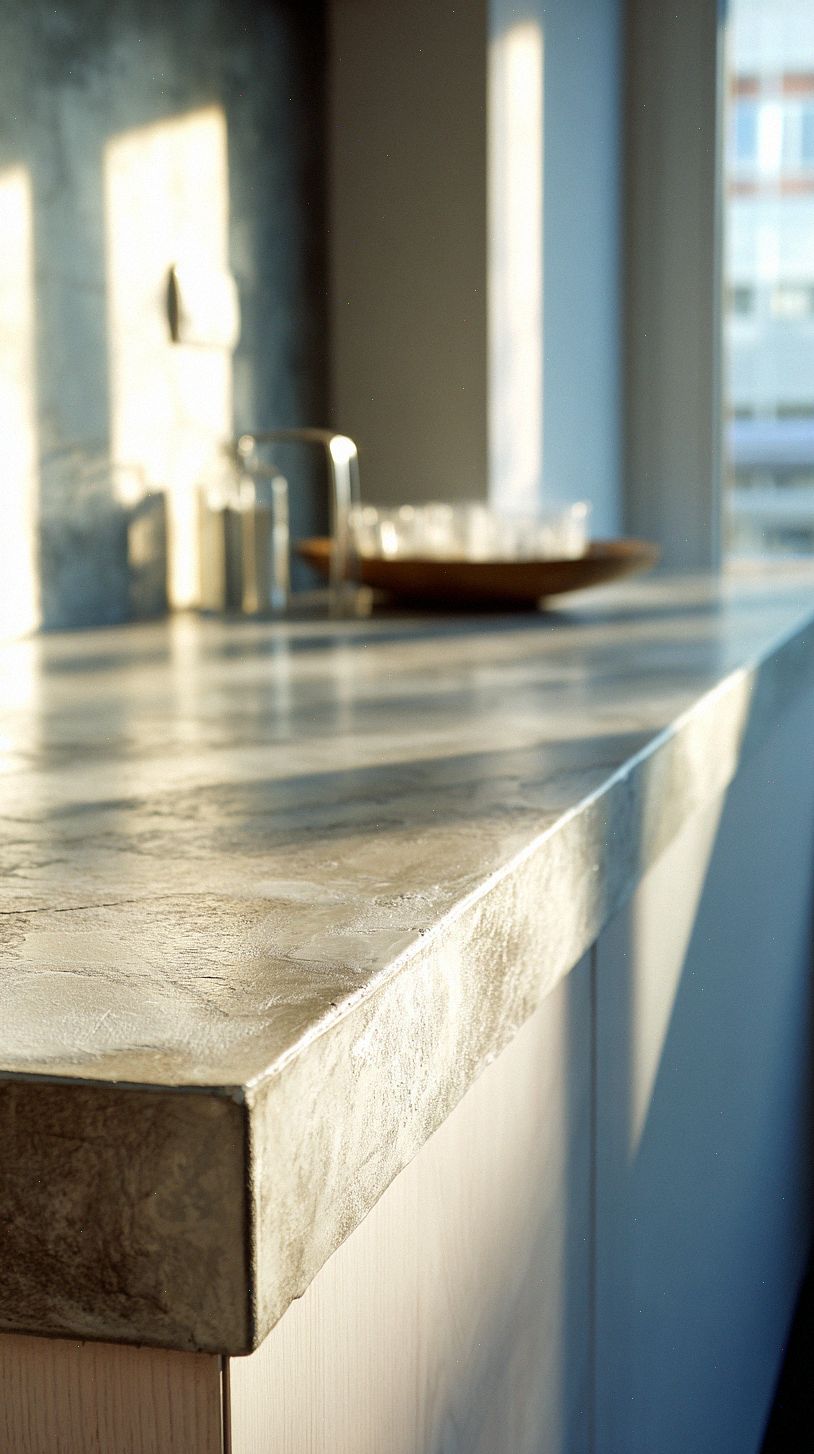
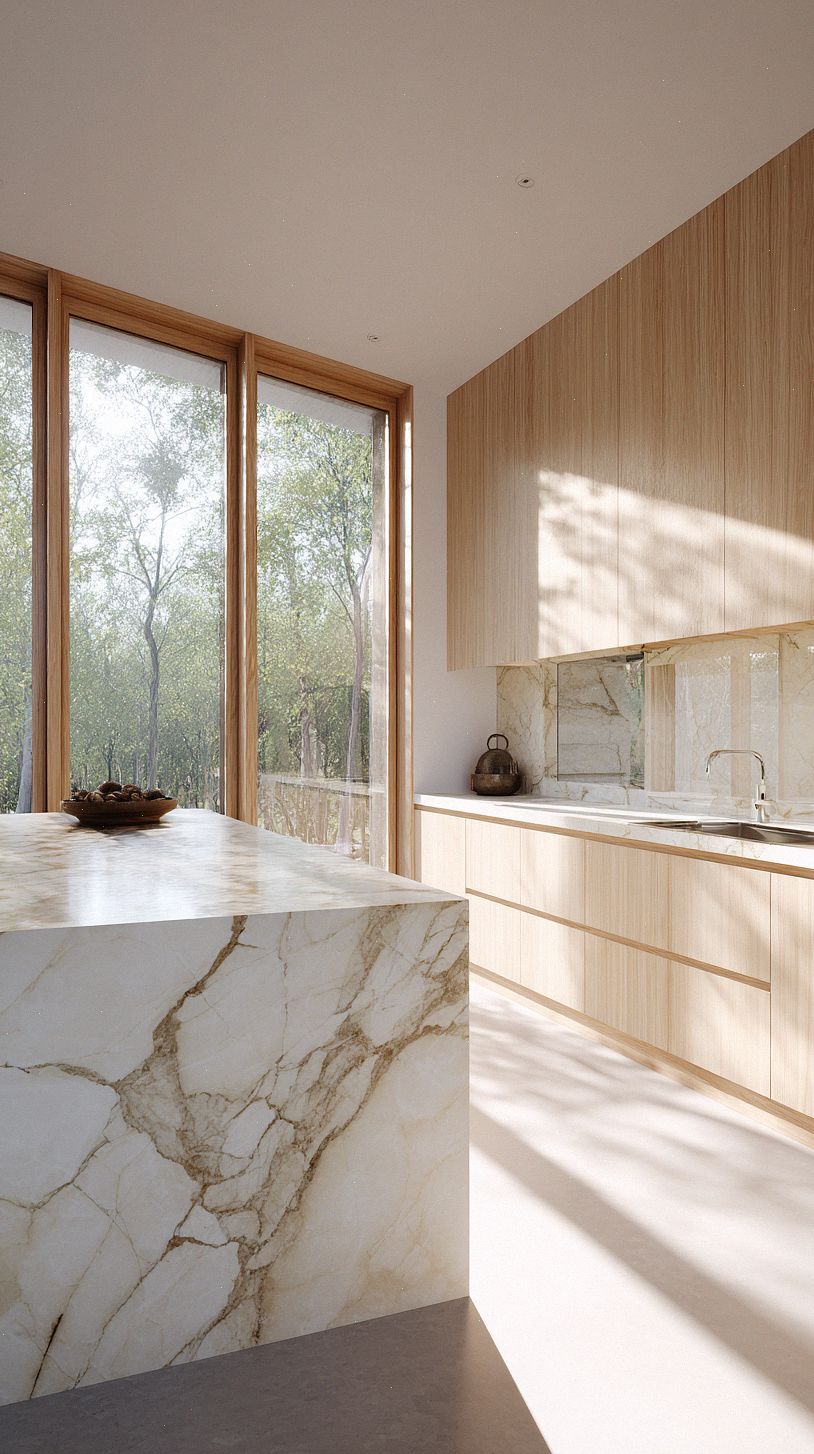
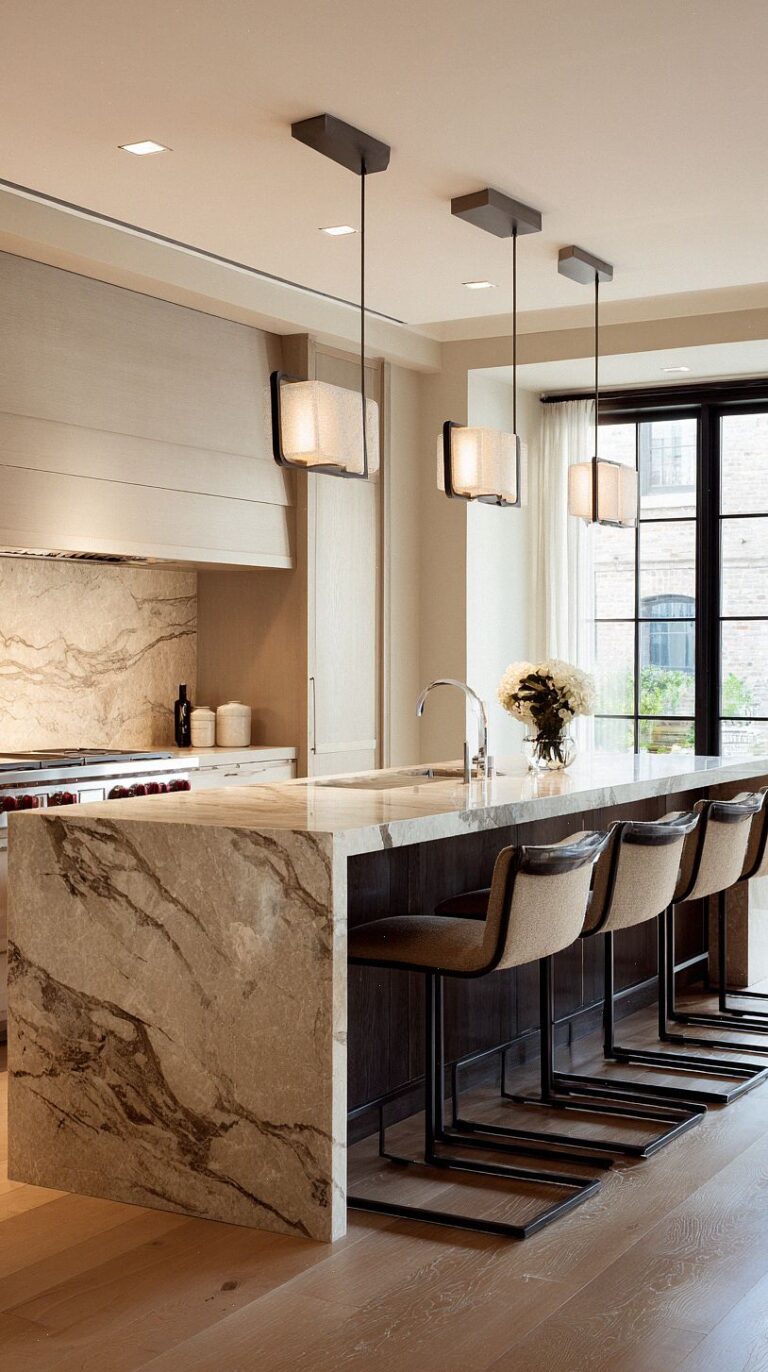
Small finish details are where countertops start to feel custom. Book-matched veins, a seamless miter at a corner, an integrated sink, or a waterfall end all draw the eye and make the material feel intentional. Even simple choices like a honed versus polished finish or tighter seams can elevate the design without blowing your budget.
Budgeting Smartly: Upfront Costs vs Long‑Term Value
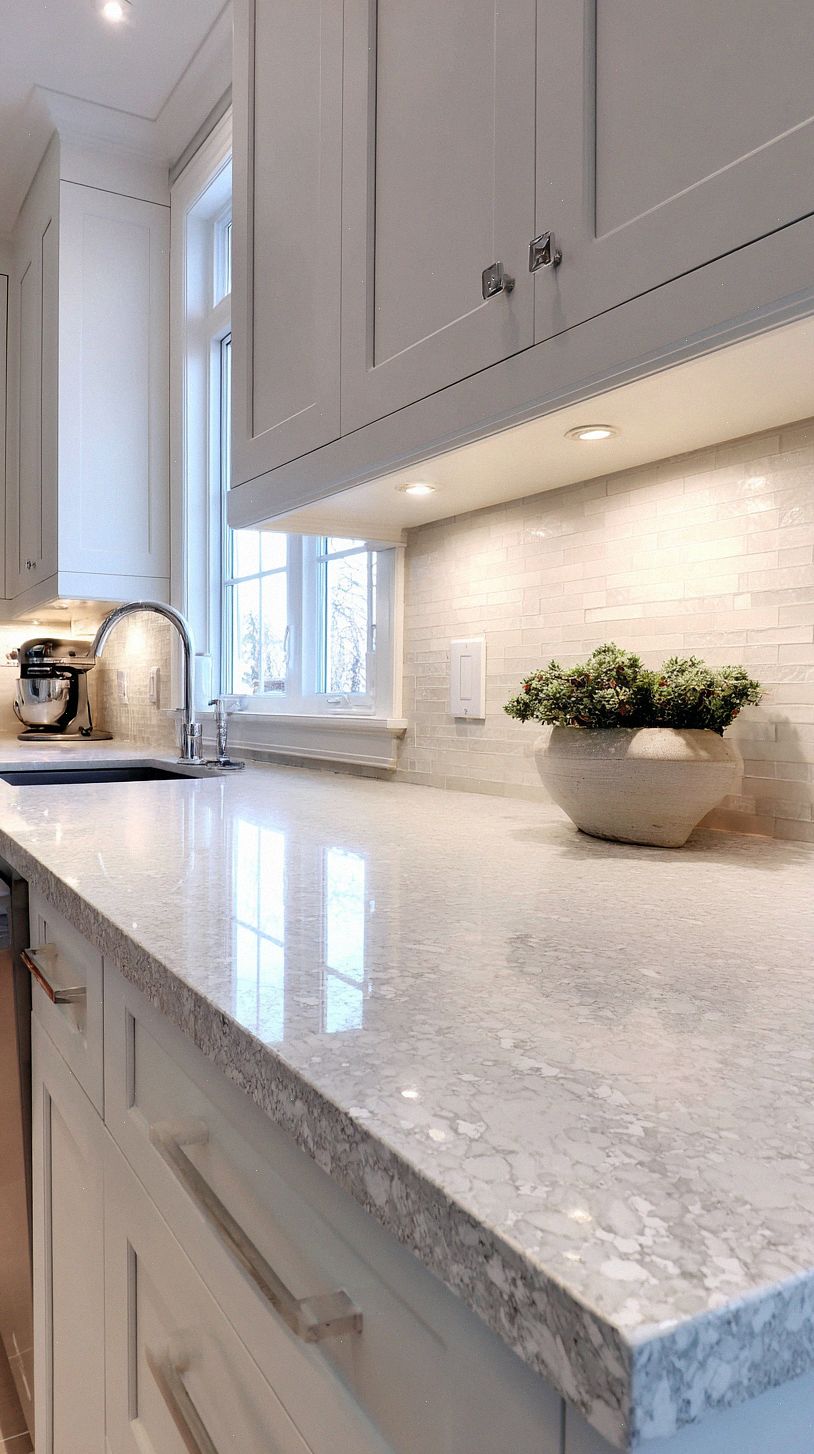
Think beyond the sticker price, because a cheap countertop today can cost you more over time. Some materials like laminate or tile lower the upfront spend but may chip, stain, or need replacement sooner, while quartz or granite cost more initially and often resist wear, lower maintenance, and can boost resale value.
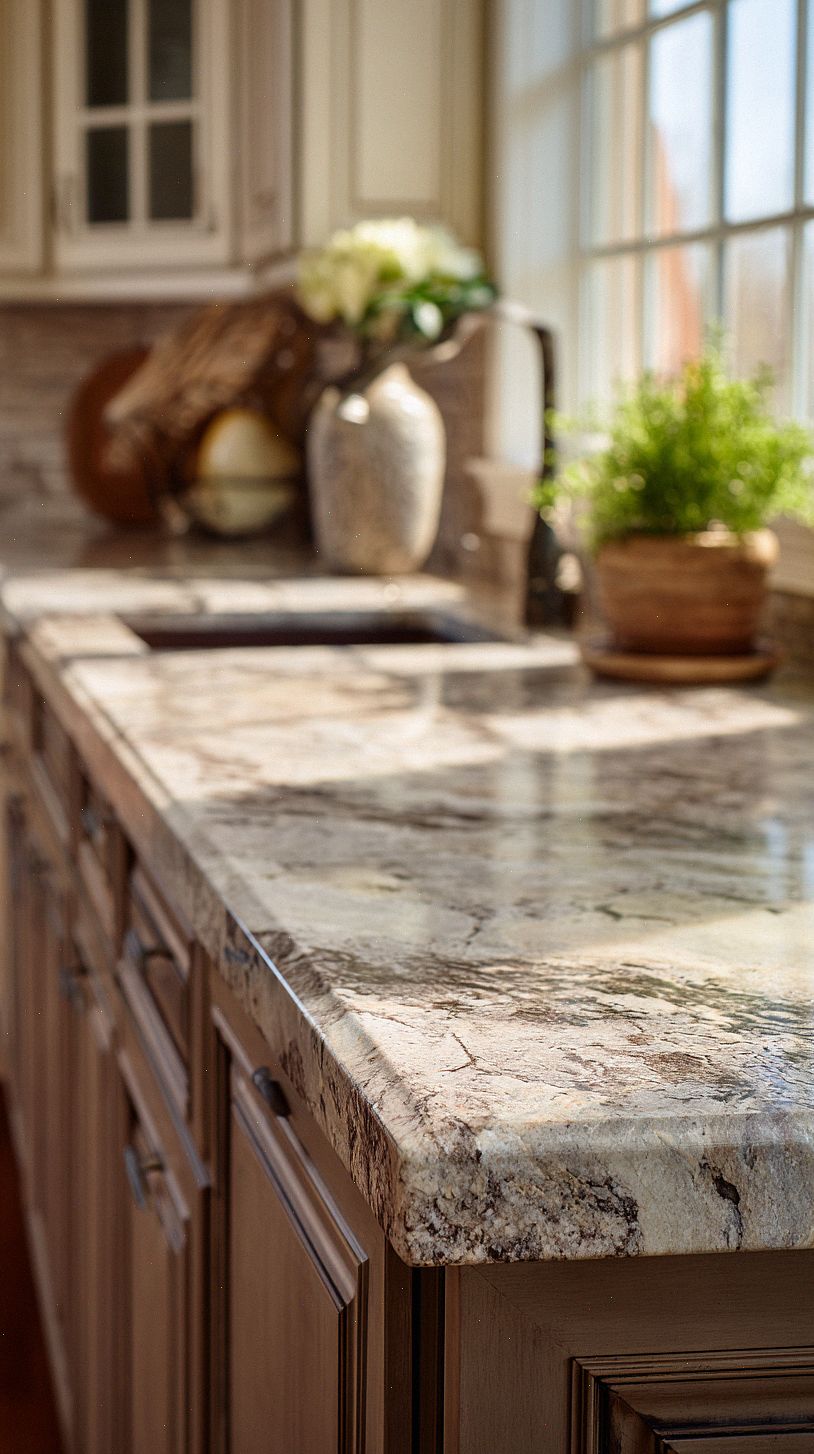
When you set a budget, include installation, seams, edge profiles, sink cuts, and any maintenance or sealing needs. Get multiple quotes, ask about warranties, and match the material to how you actually use your kitchen; if you cook and entertain a lot, spending more now can mean fewer headaches and expenses later.
Installation Considerations and Seamless Layouts
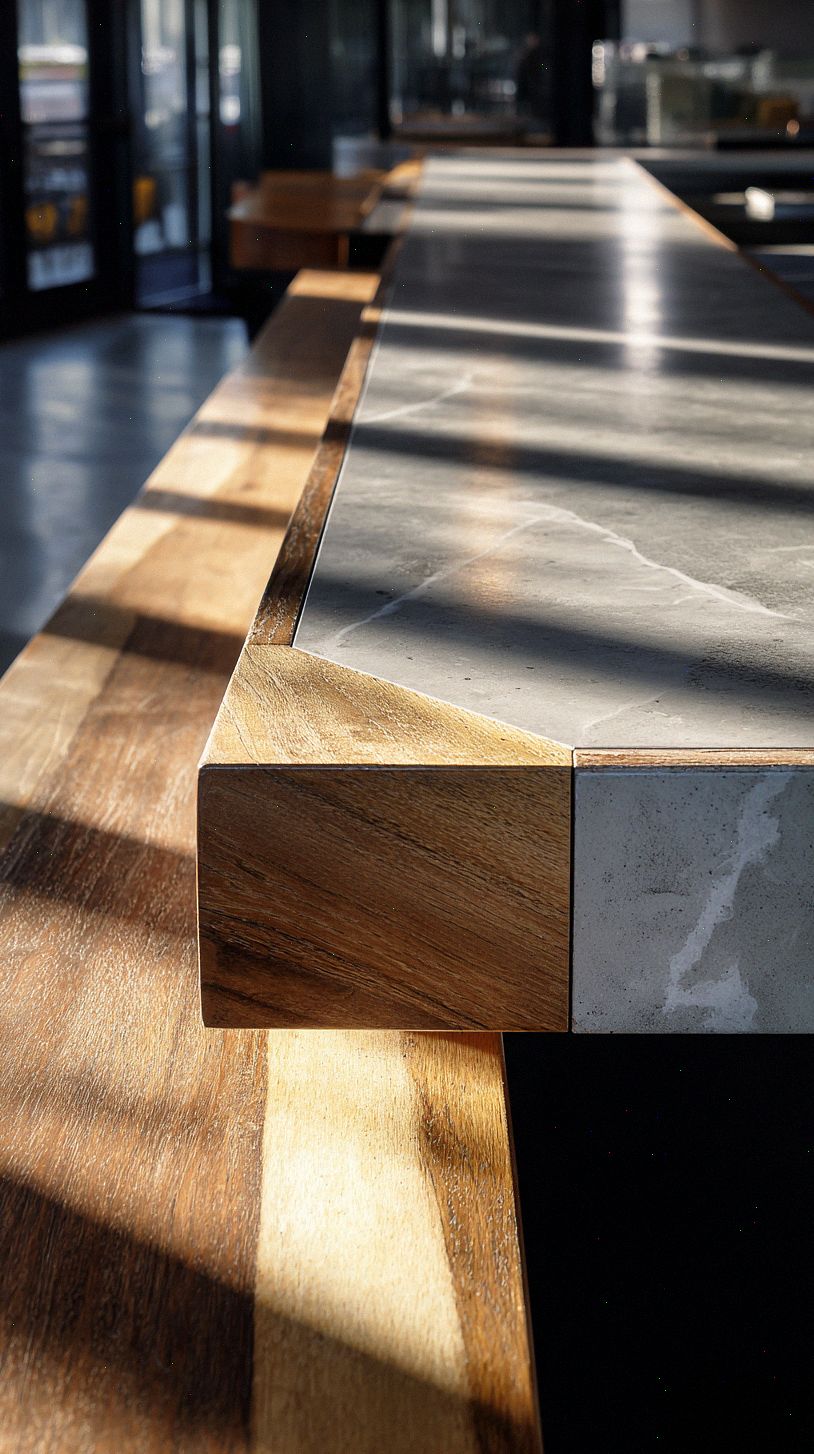
Before installation, get precise templates and confirm your cabinets are perfectly level, because even small unevenness will show up in the stone. Talk to your fabricator about slab size and vein direction so you can avoid awkward seams, and plan sink and cooktop cutouts early so undermounts and supports are reinforced. Experienced installers will set seams over cabinet joints or less visible spots and use color-matched epoxy so the join looks intentional instead of accidental.
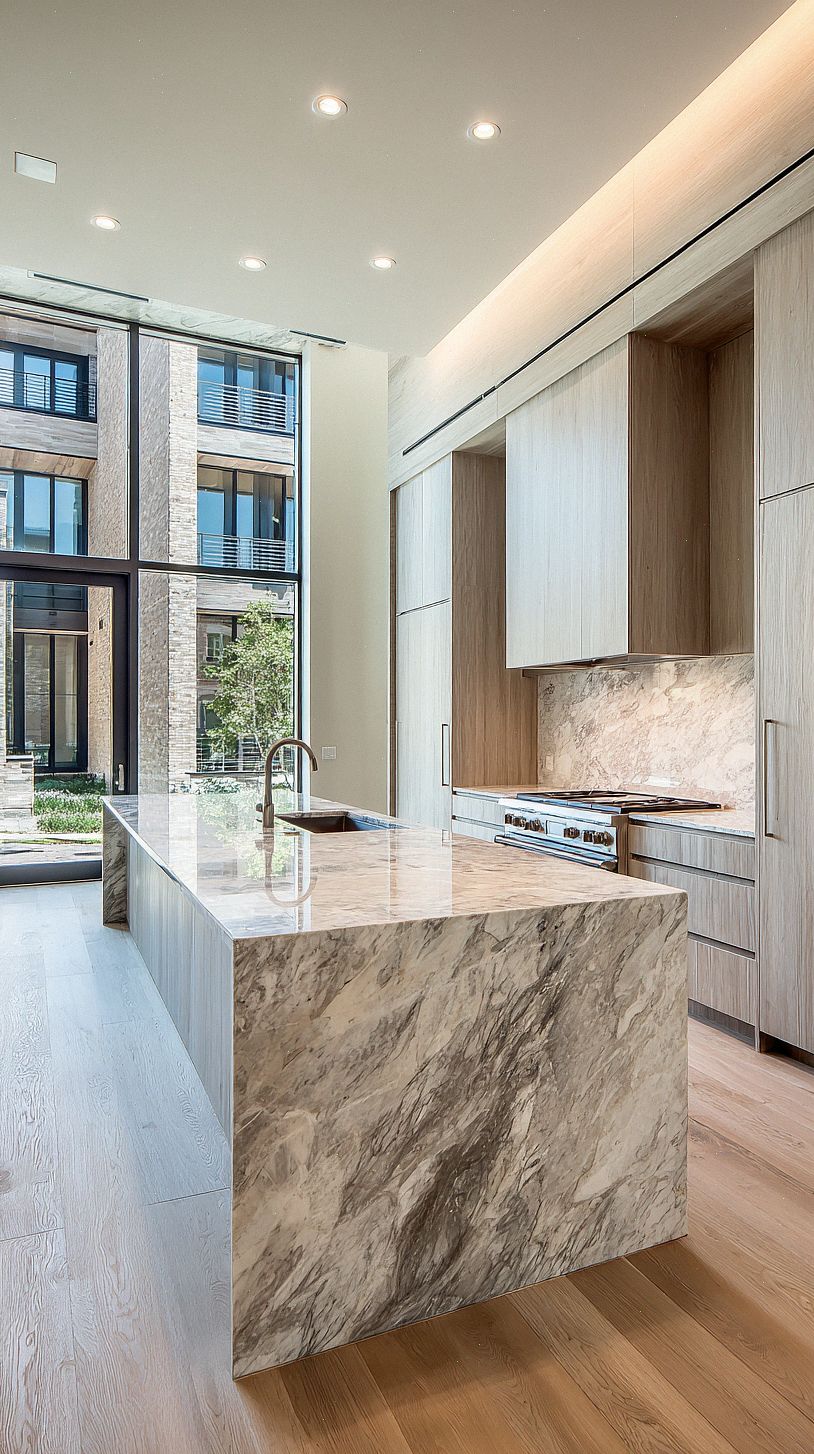
When you want a seamless look, think in runs and flows: continuous countertops from island to backsplash, a waterfall edge to visually wrap the space, or a full-height backsplash for one unbroken plane. Place seams where traffic and sightlines hide them, match patterns across adjacent slabs when possible, and factor in overhangs and appliance placement so the finished surface reads as one cohesive element.
Maintenance Tips Tailored by Material
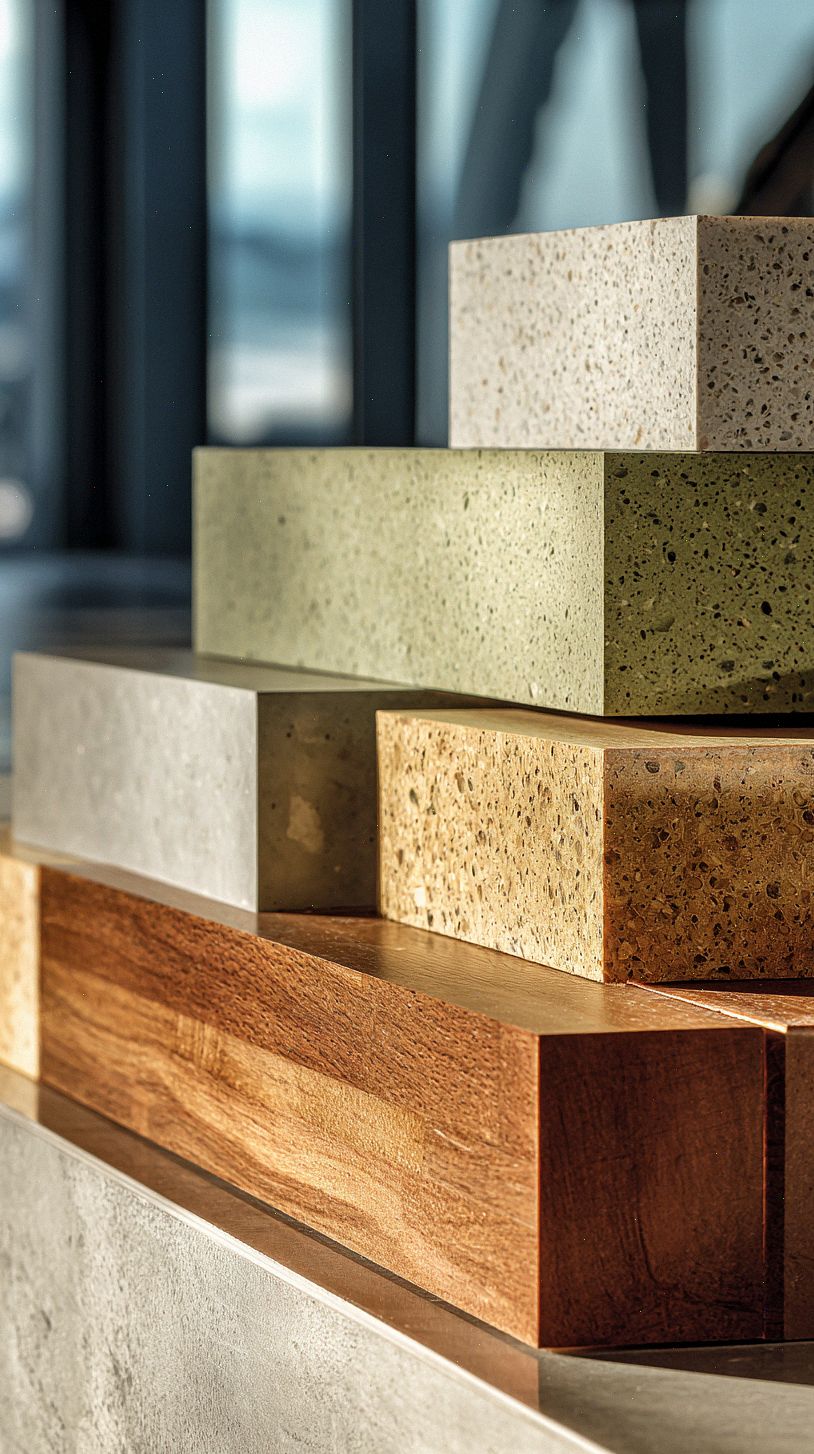
For natural and engineered stone, a little routine goes a long way. Seal granite annually and marble as needed, clean both with a gentle, pH-neutral soap and avoid acidic cleaners like vinegar or lemon. Quartz is low-maintenance since it’s nonporous; wipe spills with mild detergent, skip abrasive pads and protect it from very hot pans. Soapstone responds well to occasional mineral oil to deepen the patina, or you can let it age naturally.
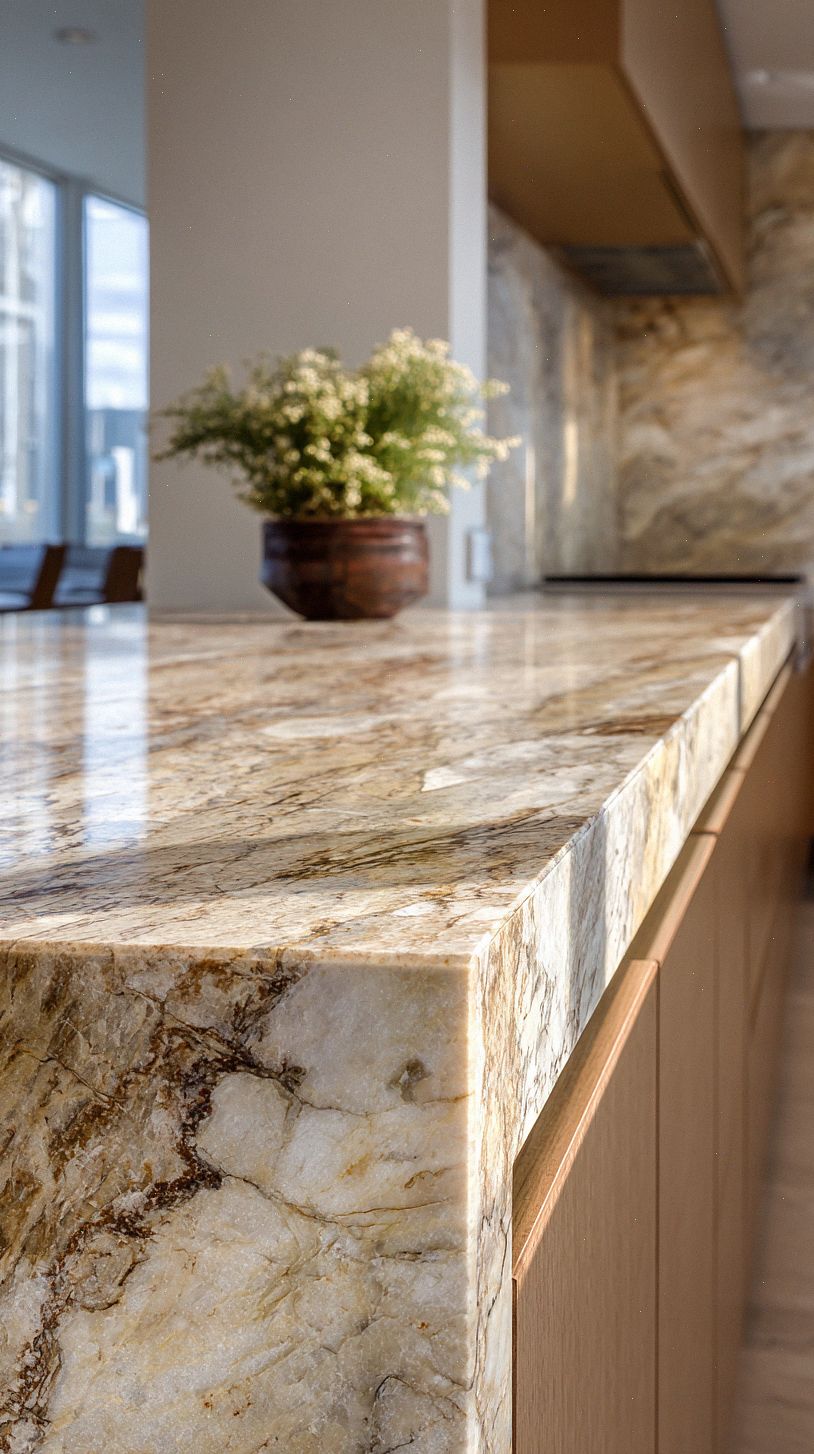
Wood, laminate, stainless steel and concrete each have their own small rituals. Oil butcher block regularly, sand out stains and always use cutting boards and trivets. Wipe laminate clean quickly and avoid direct heat on seams; minor chips can be filled. For stainless steel, clean with a soft cloth, go with nonabrasive cleaners and polish with a little oil to minimize streaks. Concrete needs sealing and resealing and gentle cleaners to prevent stains, while solid surface tops are easy to wipe and can be buffed to remove light scratches.
Eco‑Friendly and Sustainable Countertop Choices

You can get a beautiful, high-end look without sacrificing your values by choosing reclaimed or sustainably sourced materials like reclaimed wood, FSC-certified bamboo, recycled glass, paper composite, or recycled-metal surfaces. These options turn waste into a focal point, offer a range of textures and colors, and in many cases are as durable as conventional countertops — just be sure to plan for the right sealer and routine care (reclaimed wood will need periodic oiling; some composites benefit from gentle cleaners).
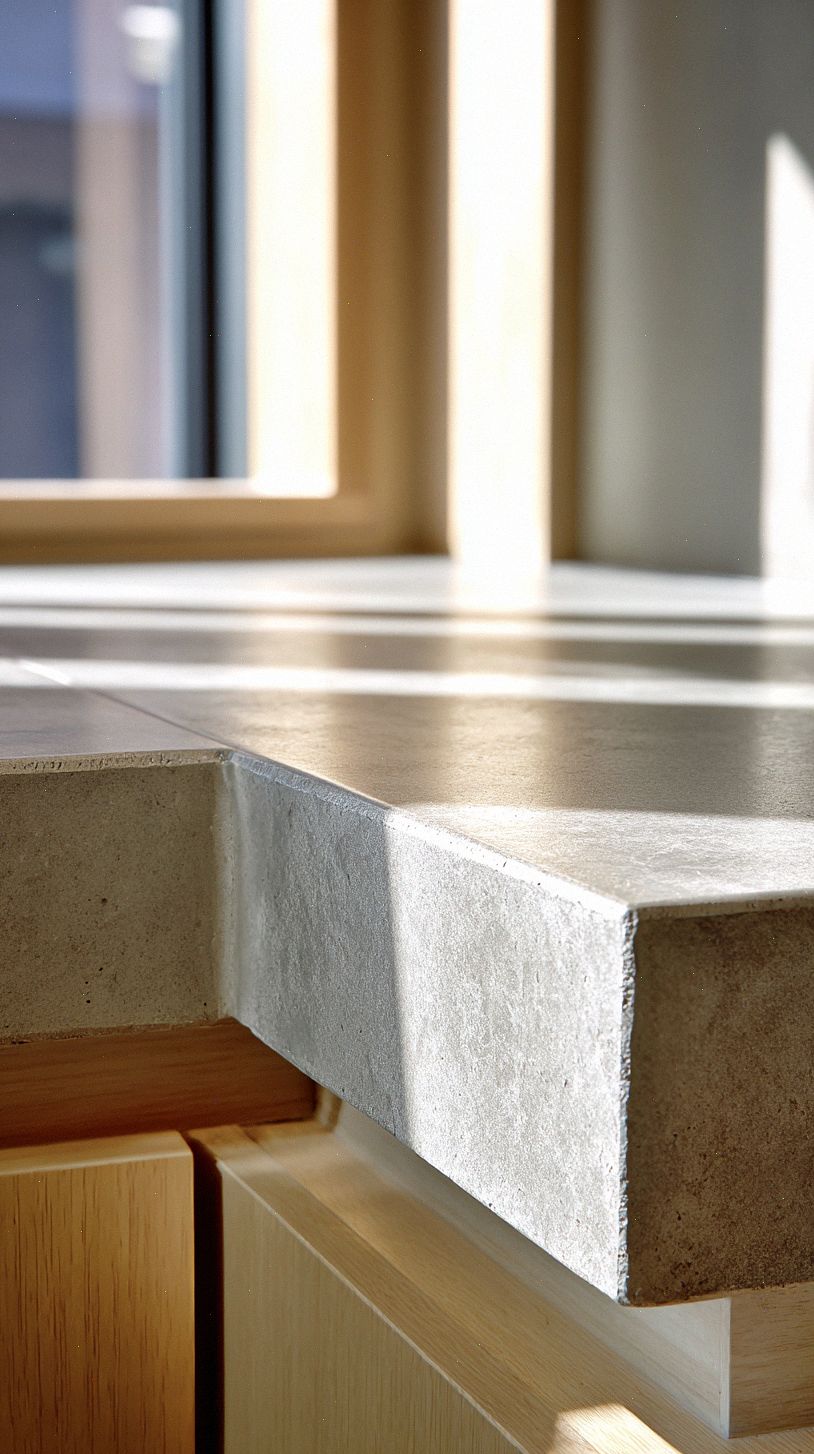
When shopping, ask about certifications and low-VOC finishes so you know the product’s health and environmental footprint — look for FSC, GREENGUARD, or Cradle to Cradle labels and ask suppliers about resin content and manufacturing practices. Choosing a durable, responsibly made countertop reduces long‑term impact and gives your kitchen character, so prioritize lifespan and transparency over trendy materials.
Timeless Picks and Current Trends to Know
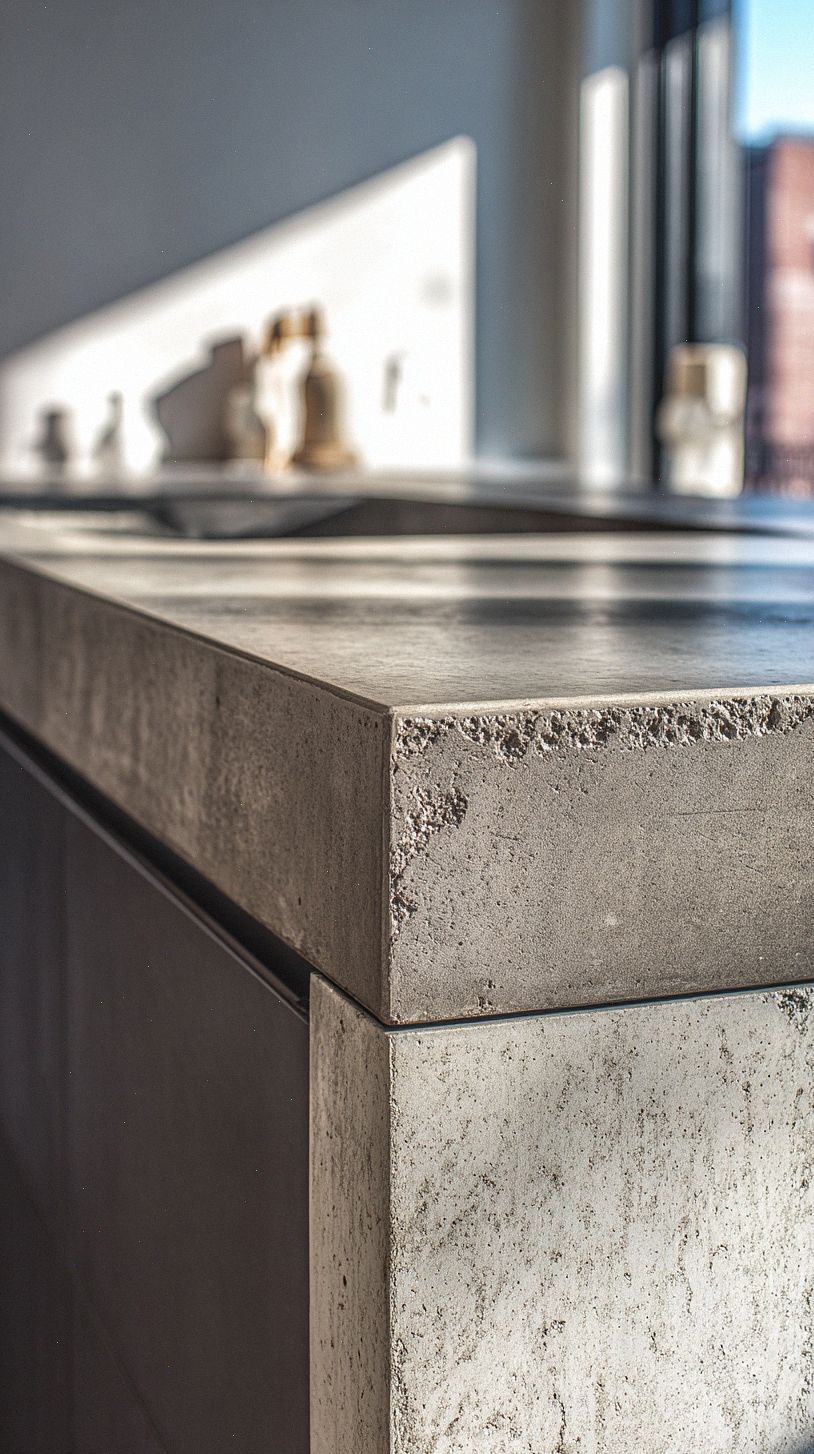
You can’t go wrong with a few classic options: granite for durability and unique veining, marble for that elegant look if you’re willing to seal and care for it, quartz for low maintenance and consistent color, butcher block for a warm, lived-in feel, and soapstone for a soft patina that ages beautifully. These materials hold resale value and give your kitchen a grounded, timeless vibe.
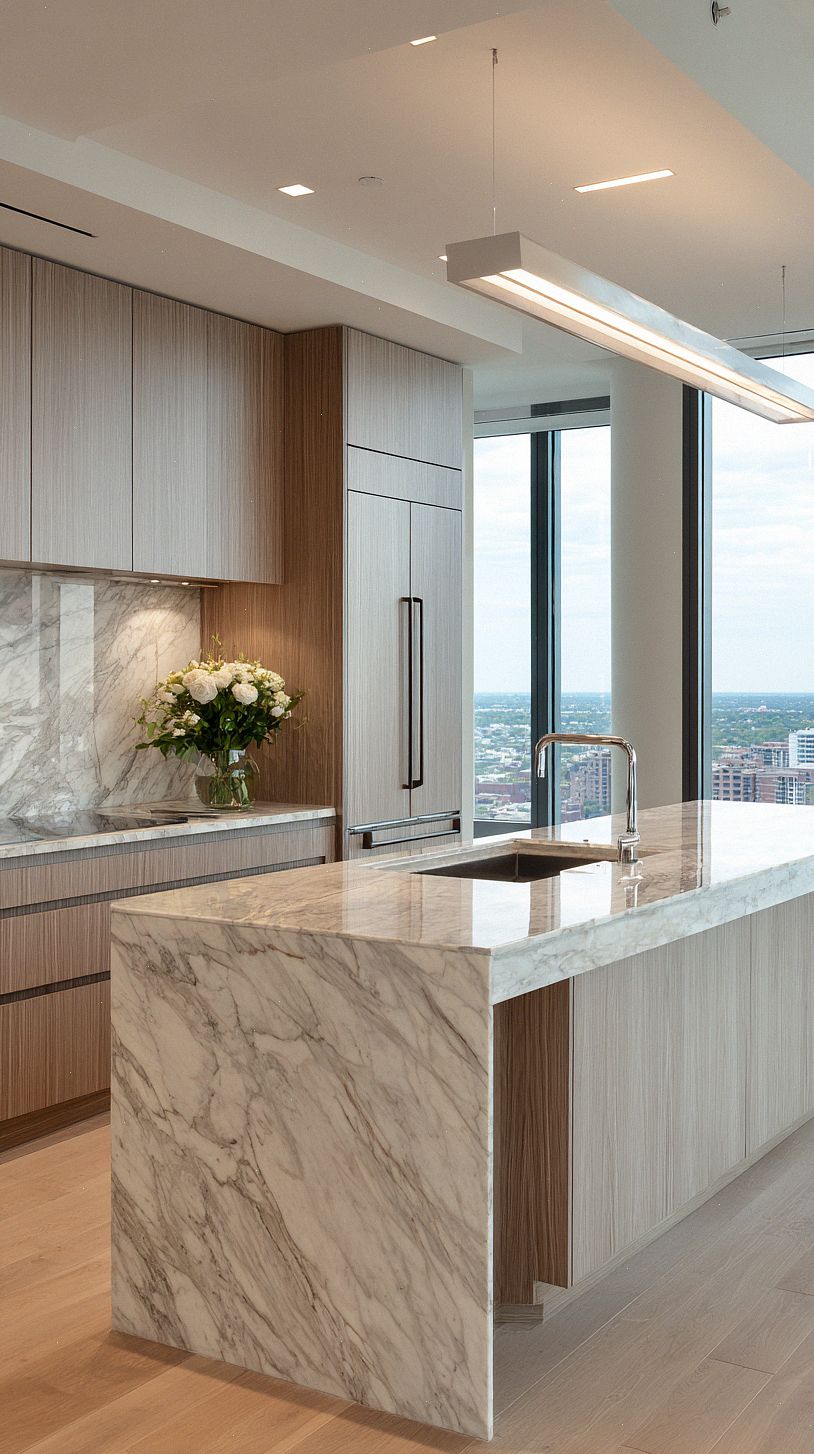
Right now you’ll see big trends like large-format porcelain slabs that mimic stone without the upkeep, matte or leathered finishes that hide wear, bold veining and warmer, earthy tones, and creative touches like waterfall edges or mixed-material islands. If you want trendy without regret, choose a neutral, durable surface for most of the room and make a bolder statement on the island, and consider eco-friendly options like recycled glass or porcelain for a modern, responsible twist.