How to Design a Living Room TV Wall That Looks Stylish Not Cluttered
We all love a big, beautiful TV, but when the wall around it starts to look like a jumble of cables, mismatched shelves, and gadgets, the whole room loses its calm. Designing a living room TV wall that feels stylish instead of cluttered is less about hiding the TV and more about treating it like a considered piece of the room. With a few rules about scale, sightlines, and storage we can make that focal point feel intentional and polished.
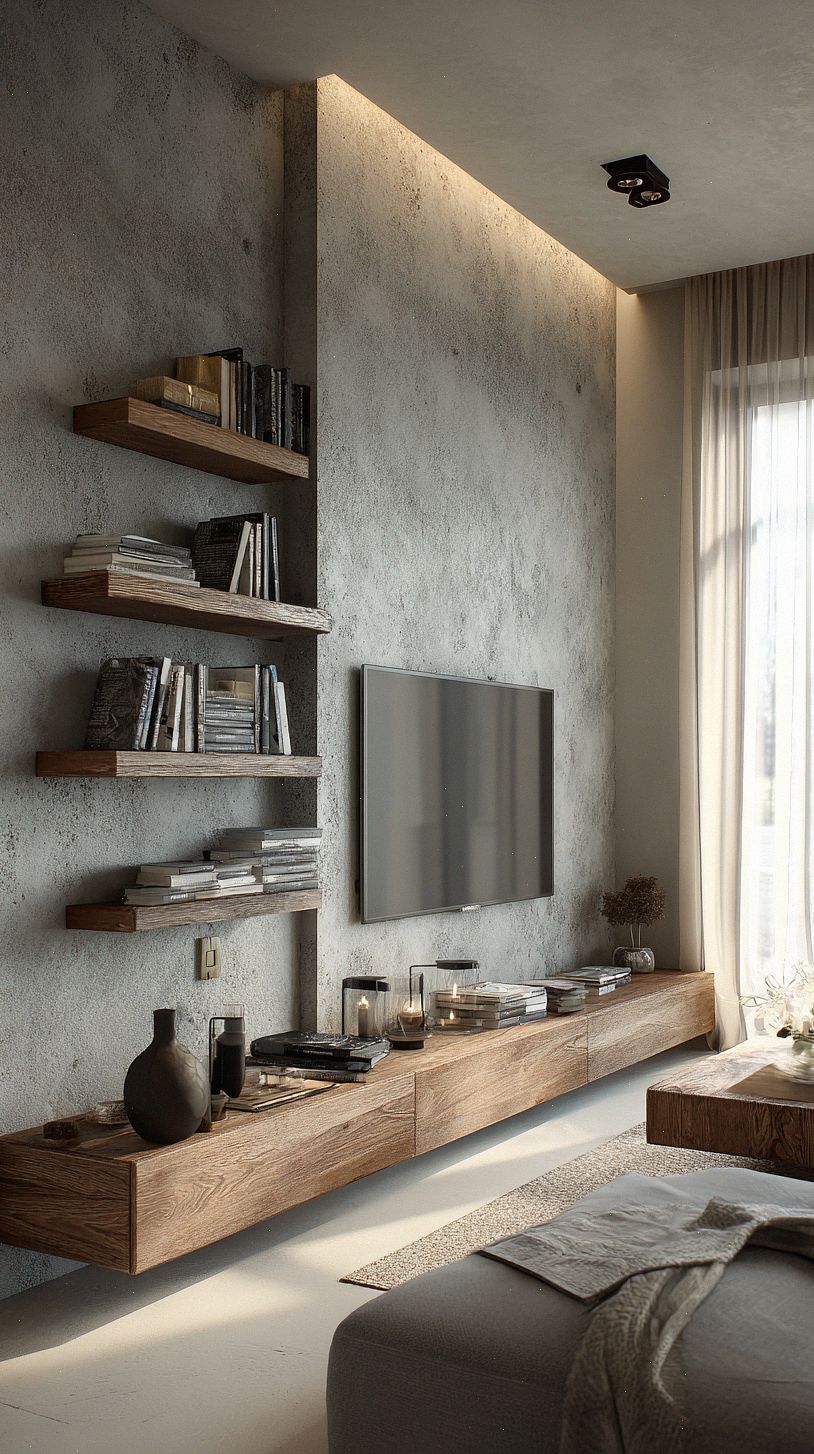
In this article we’ll walk through everything from choosing the right TV size and placement to deciding between built-in units and floating consoles, and from clever concealed storage to simple wall treatments that add texture without noise. We will cover minimal shelving and art guidelines, how to hide cables and organize tech, and the finishing touches like lighting and greenery that make a TV wall feel like part of the design. Along the way we’ll point out common mistakes and easy maintenance habits so your space stays looking intentional for years.
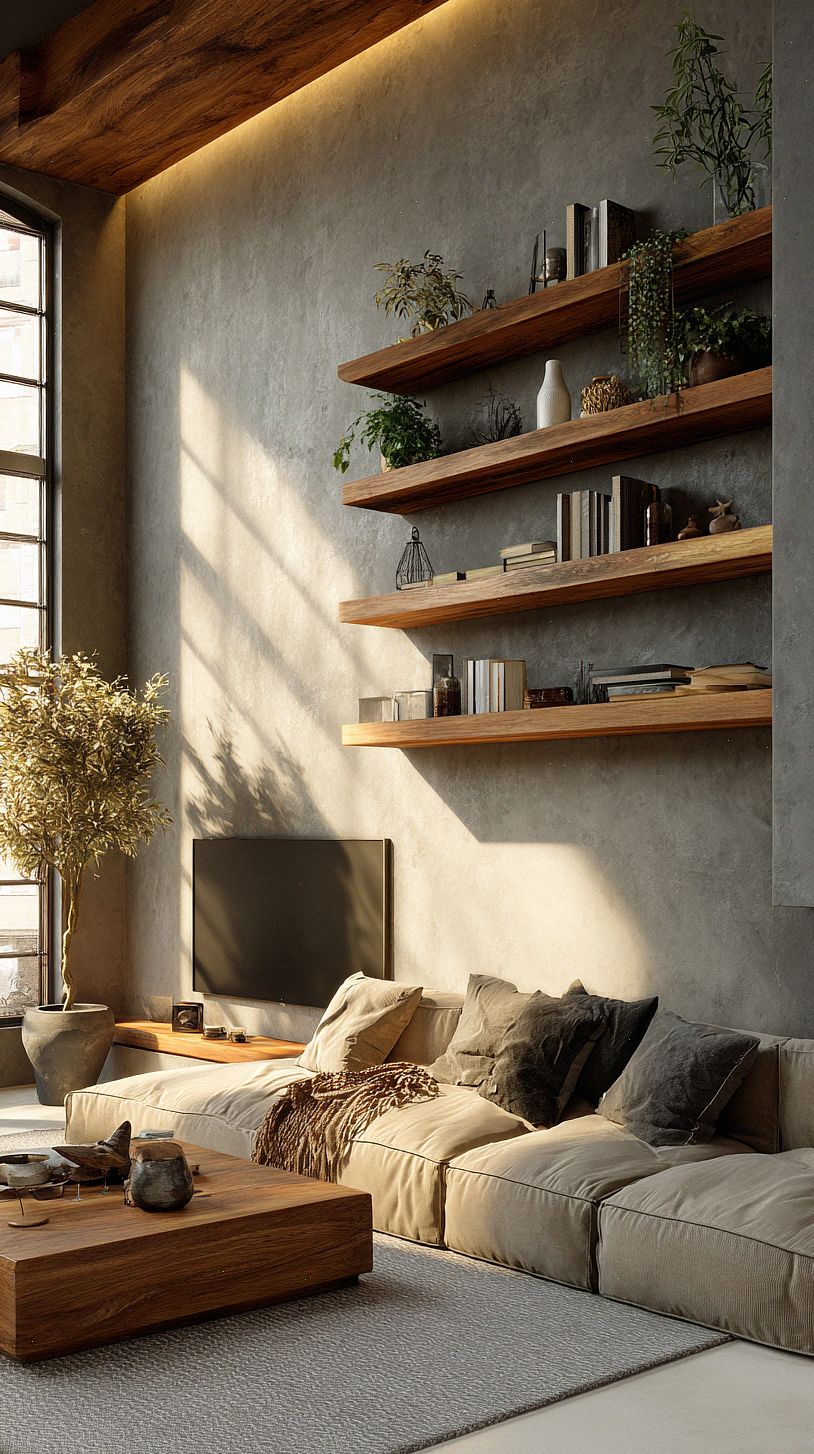
Define a Stylish, Uncluttered TV Wall
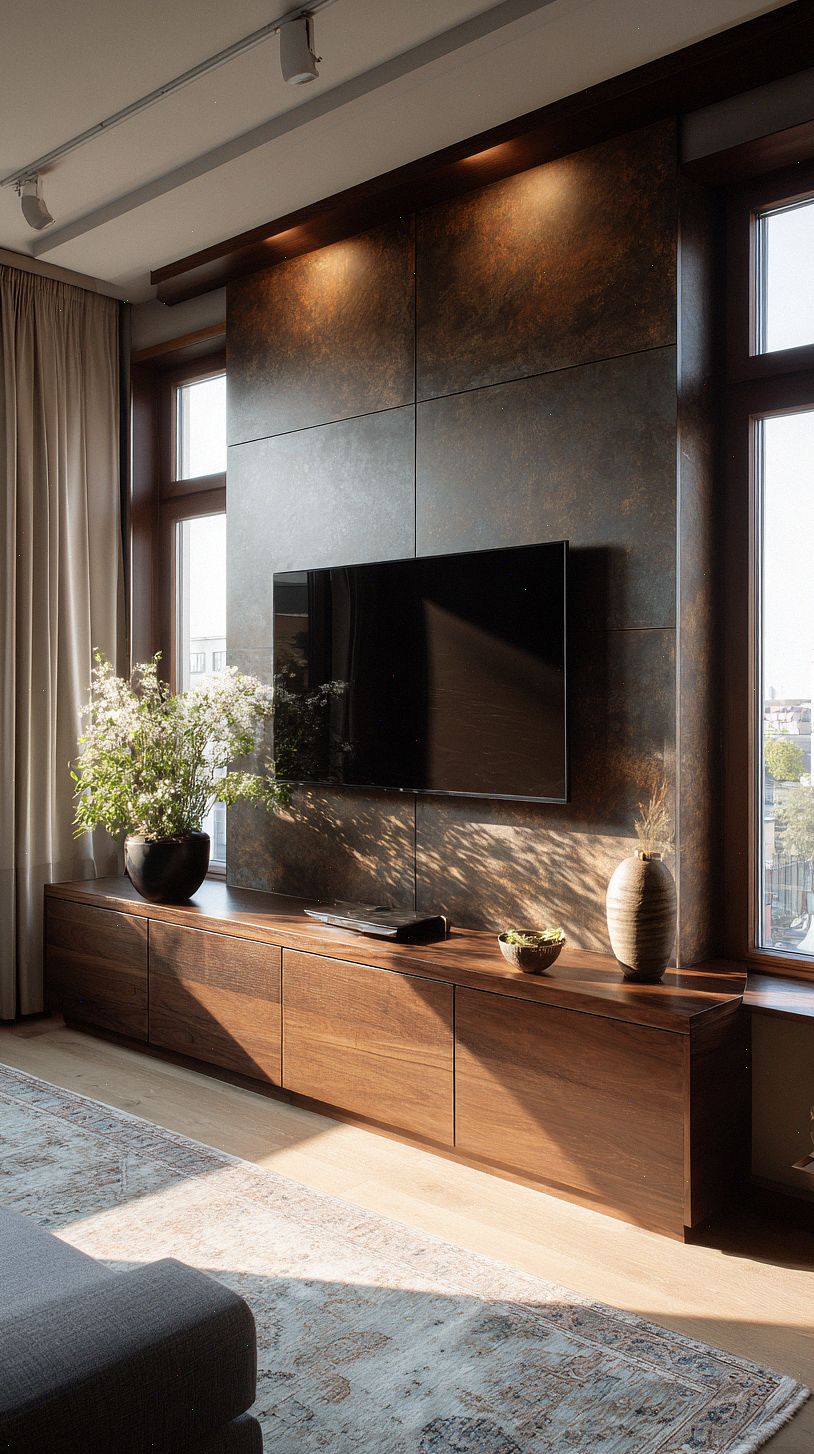
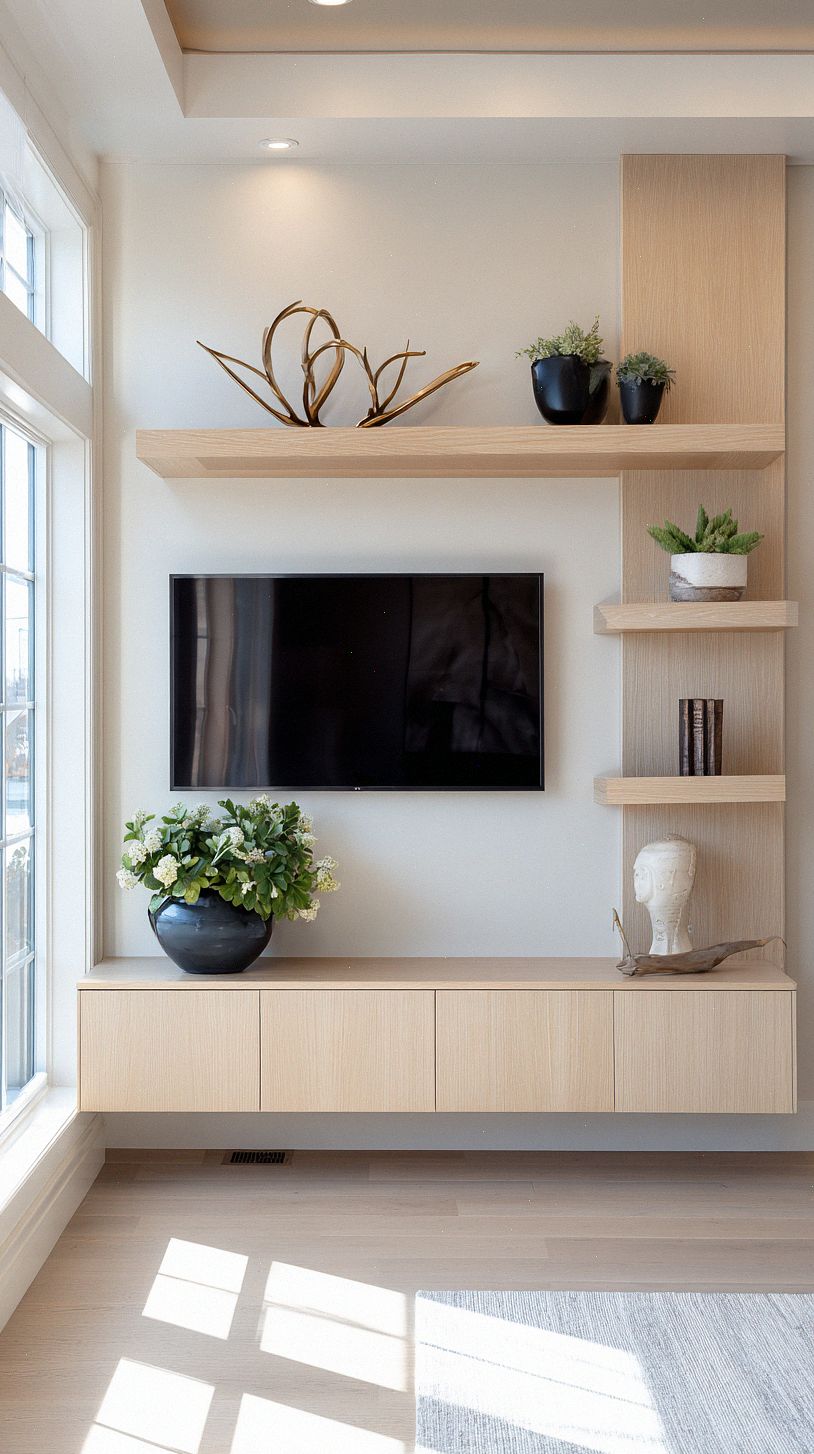
Think of your TV wall as one calm canvas rather than a place to stuff every shelf. Mount the TV flush, conceal cables, and choose a simple backdrop like a textured paint, panel, or muted wallpaper to give it presence without shouting. Keep surrounding elements scaled to the screen, and use symmetry or one intentional focal accessory to make the layout feel deliberate instead of cluttered.
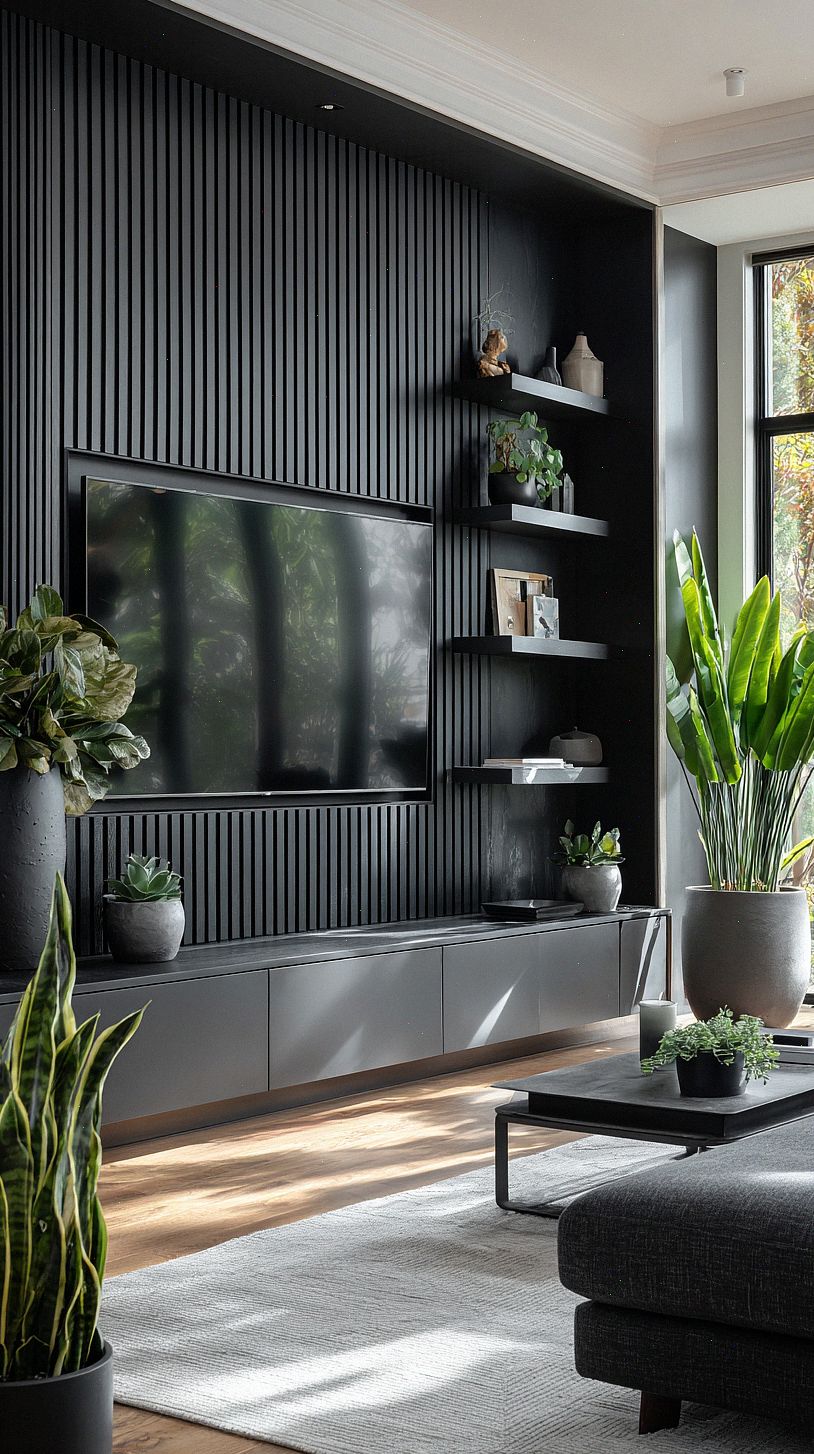
Hide tech in a low-profile console or built-in cabinets so remotes, game boxes, and cords stay out of sight, and limit decorative objects to a few meaningful pieces so each one breathes. Anchor the composition with a single large art piece or a small cluster of matching frames, and stick to a restrained color and material palette for a polished, airy look.
Choose the Right TV Size and Placement
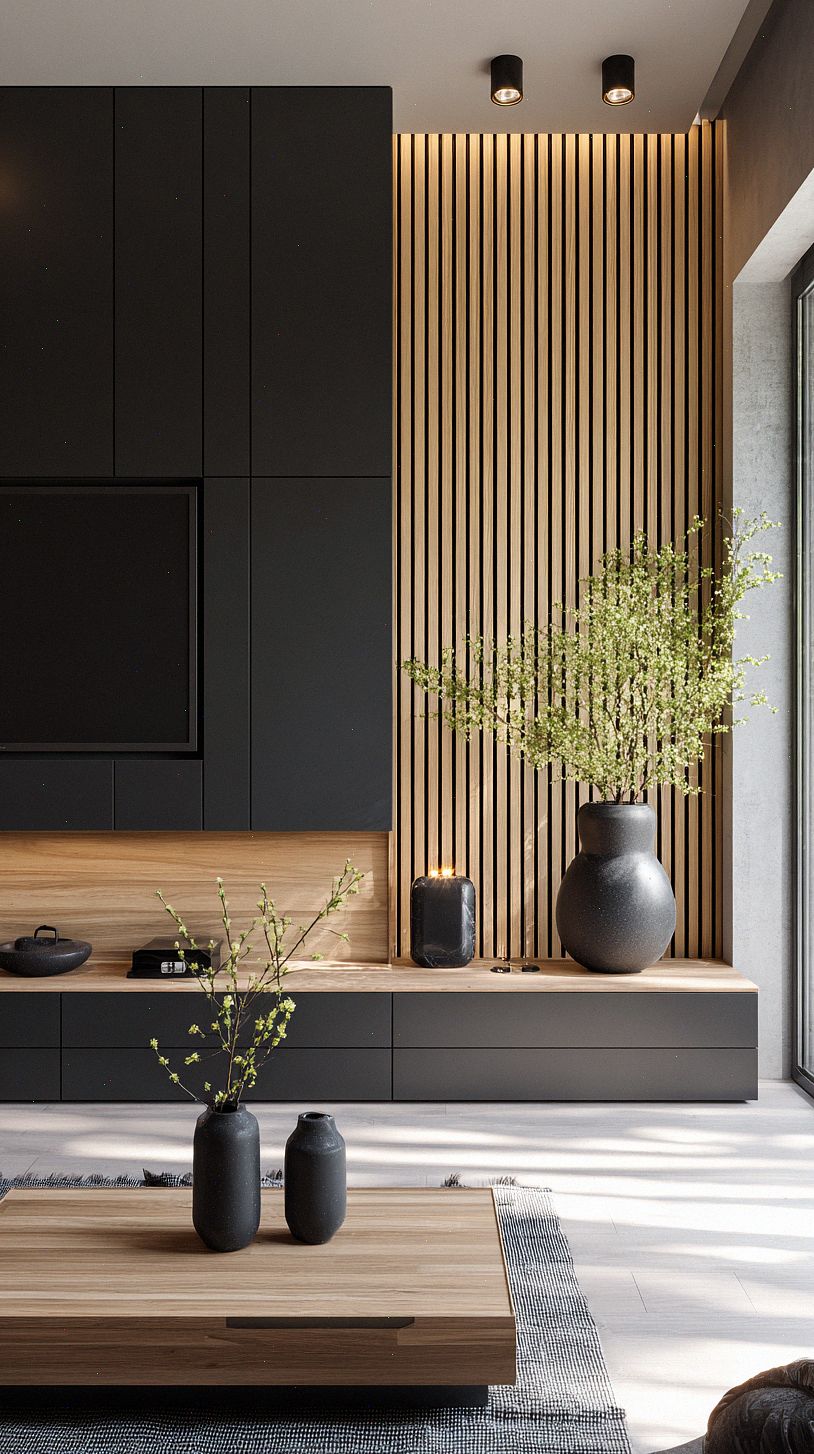
Start by measuring the distance from your main seat to the wall, then pick a screen that fills your field of view without dominating the room. A simple rule of thumb is to sit about 1.5 to 2.5 times the TV diagonal away, so a 55 inch set is comfortable from roughly 7 to 11 feet; with 4K TVs you can go a bit larger because the detail holds up closer.
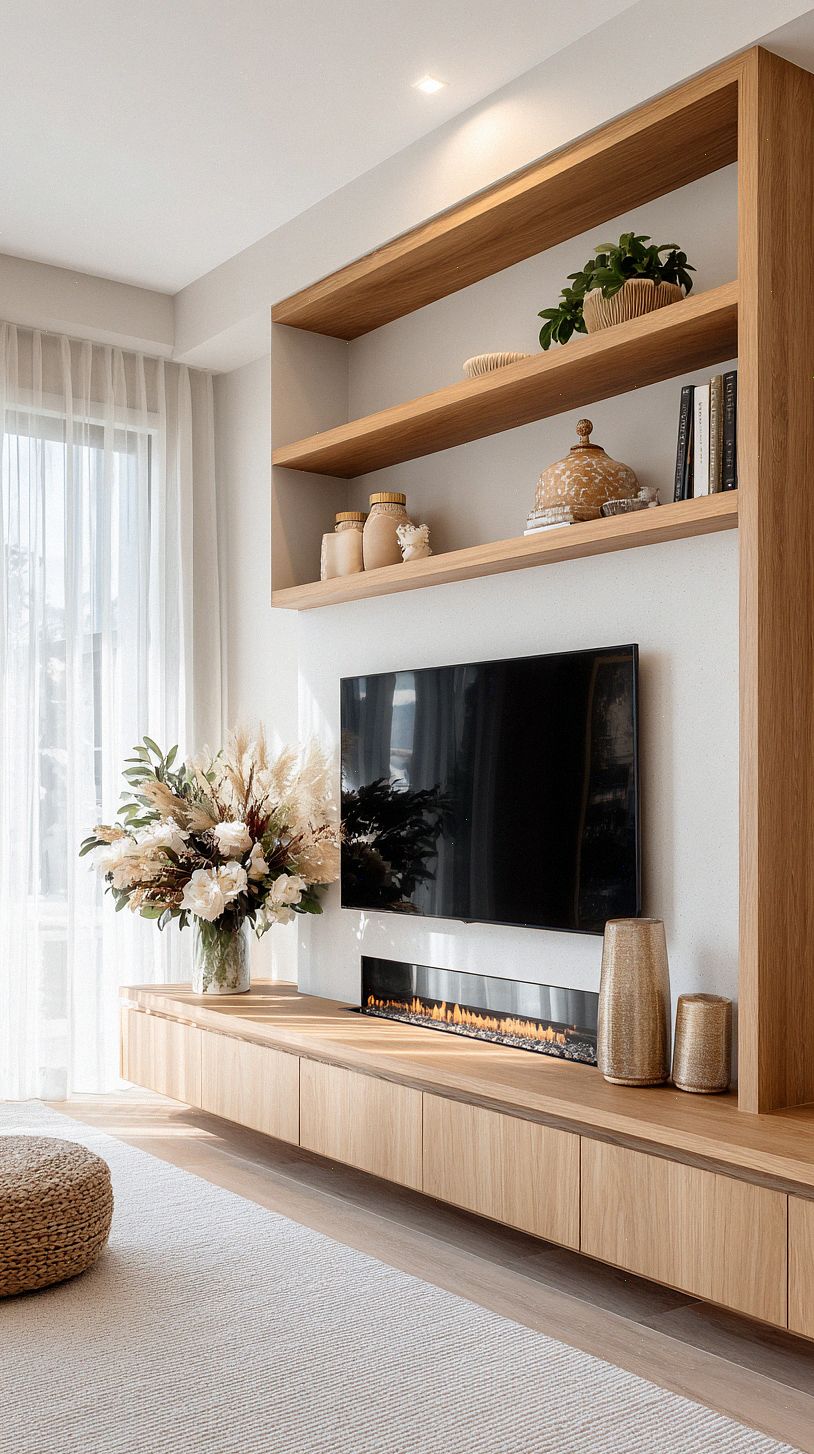
Mount the TV so the center of the screen sits near eye level, around 40 to 45 inches from the floor depending on your couch height, and tilt it slightly if you must place it higher. Give the screen breathing room by centering it on the wall or above a low console, avoid crowding it with shelves or frames, and check for glare from windows before you commit.
Plan Symmetry, Scale, and Sightlines
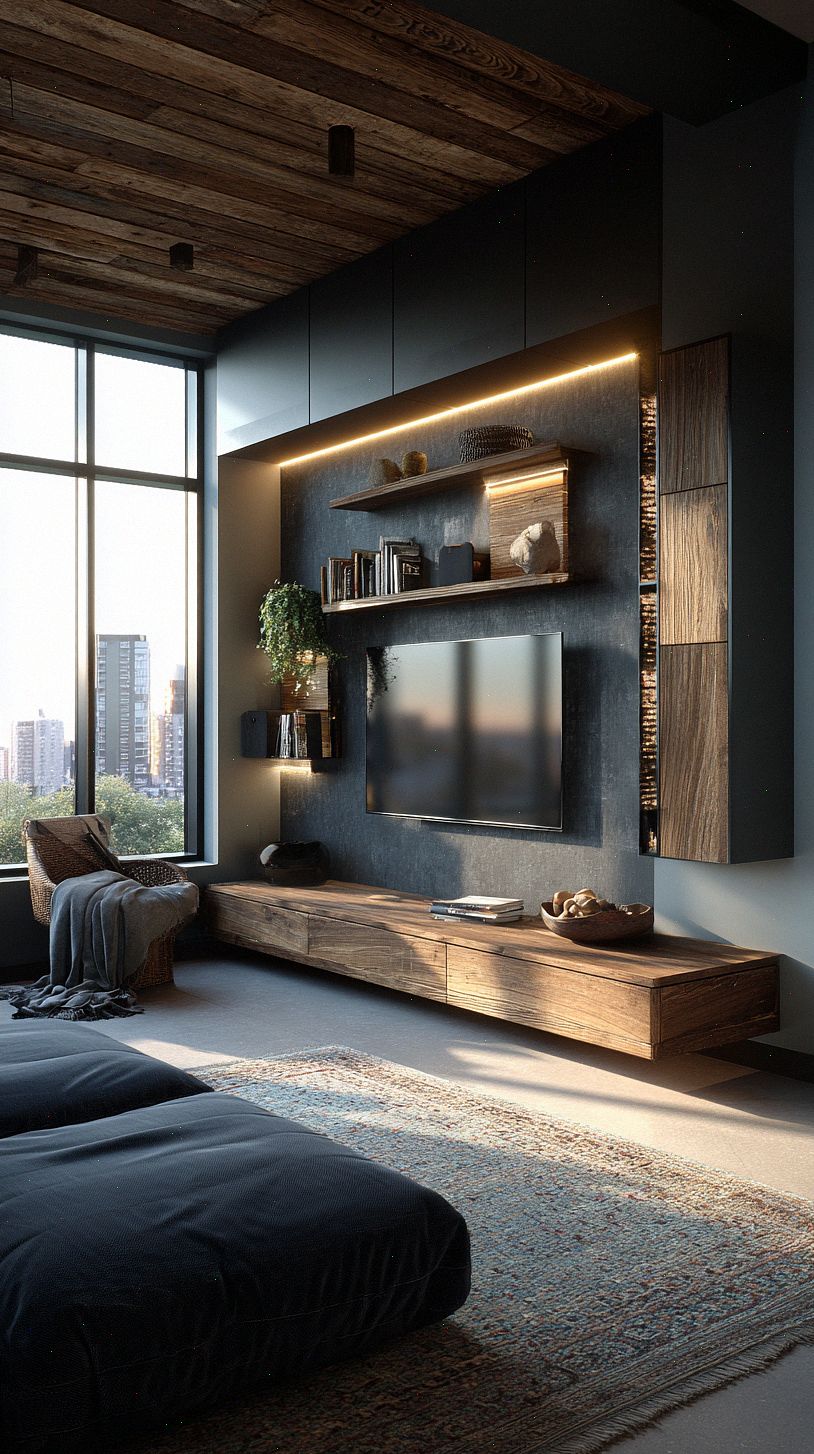
Decide whether you want strict symmetry or a balanced, intentional asymmetry, because either approach keeps the wall from feeling chaotic. If you opt for symmetry, center the TV and mirror matching shelving or artwork on each side to create a calm, curated look. If you prefer asymmetry, balance a large open shelf or plant opposite a cluster of smaller items so the overall visual weight feels even and not cluttered.
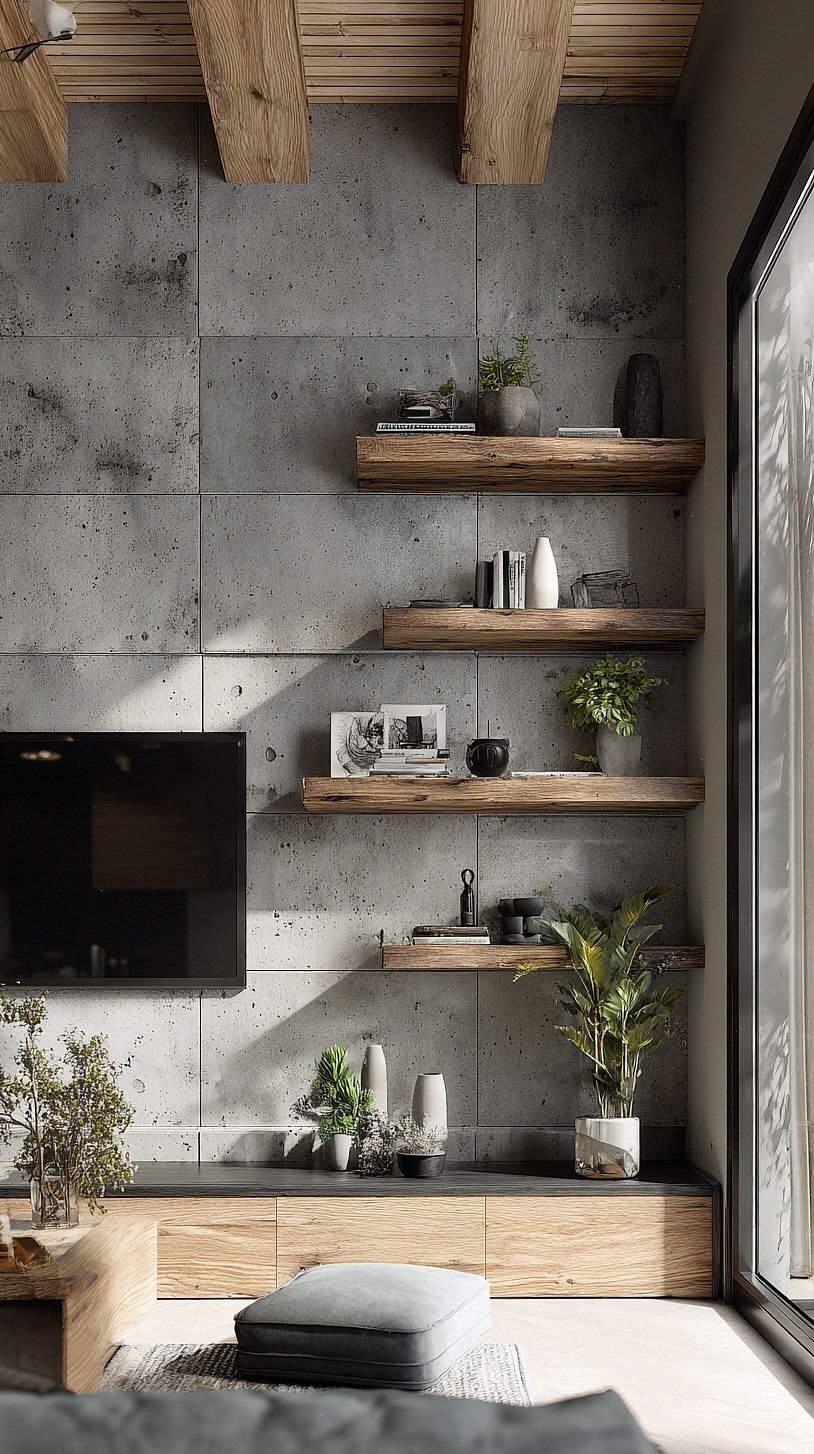
Think about scale and sightlines before you start hanging things. Pick a TV size that fits the wall and your viewing distance, roughly 1.5 to 2.5 times the screen diagonal, and mount the screen so the center sits around eye level when seated, about 42 inches from the floor as a guideline. Arrange furniture and lower consoles to preserve clear sightlines from all seating angles, avoid small knickknacks crowding a big screen, and leave breathing room so the TV remains the focal point without feeling overwhelming.
Built-In Units vs Floating Consoles
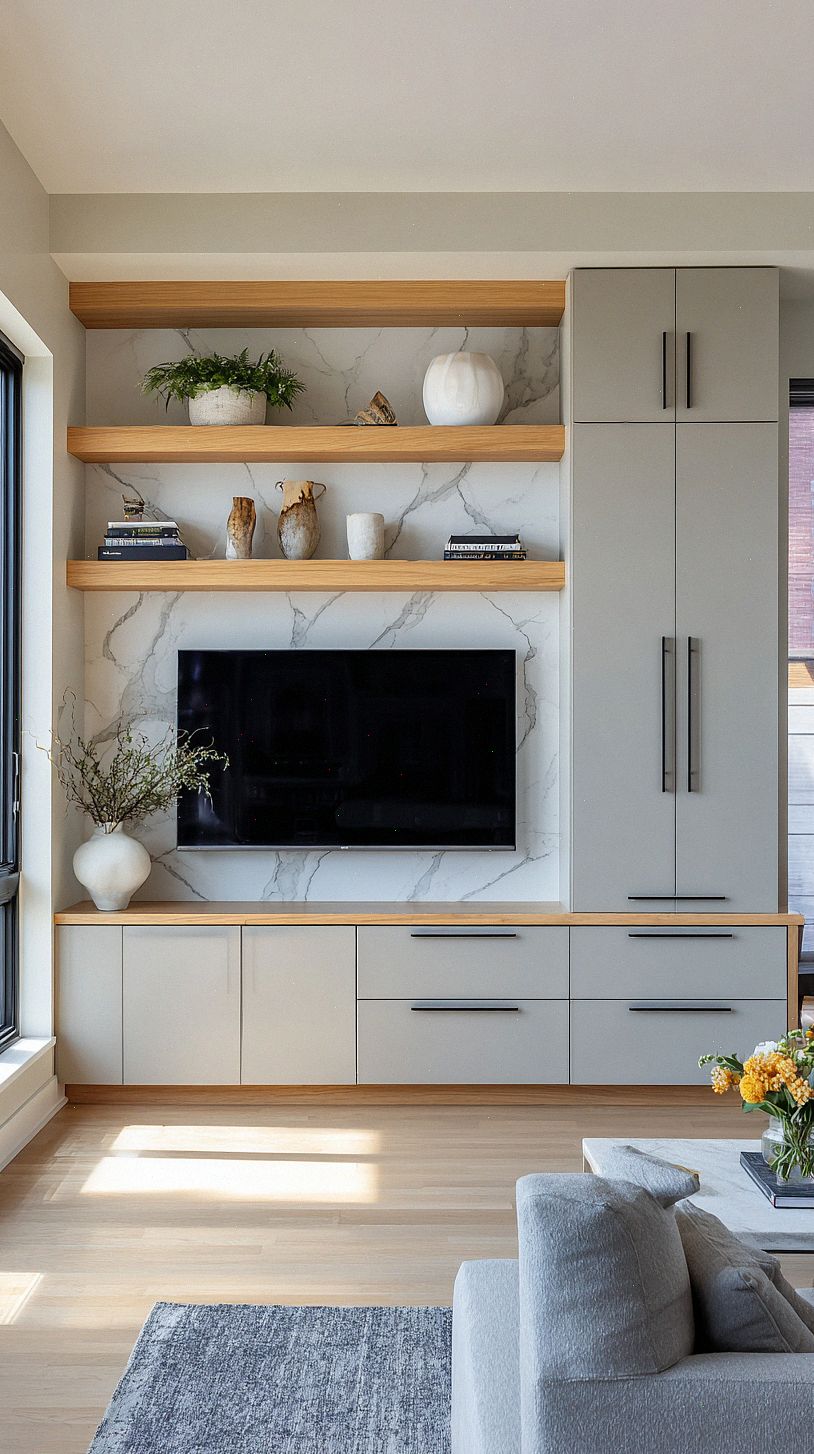
If you want a seamless, custom look that makes the TV feel built into the room, built-in units are your friend. They give you lots of hidden storage to stow remotes, consoles, and cords so the wall reads clean and intentional, but they are more permanent and usually pricier, so consider how long you plan to keep the layout before committing.
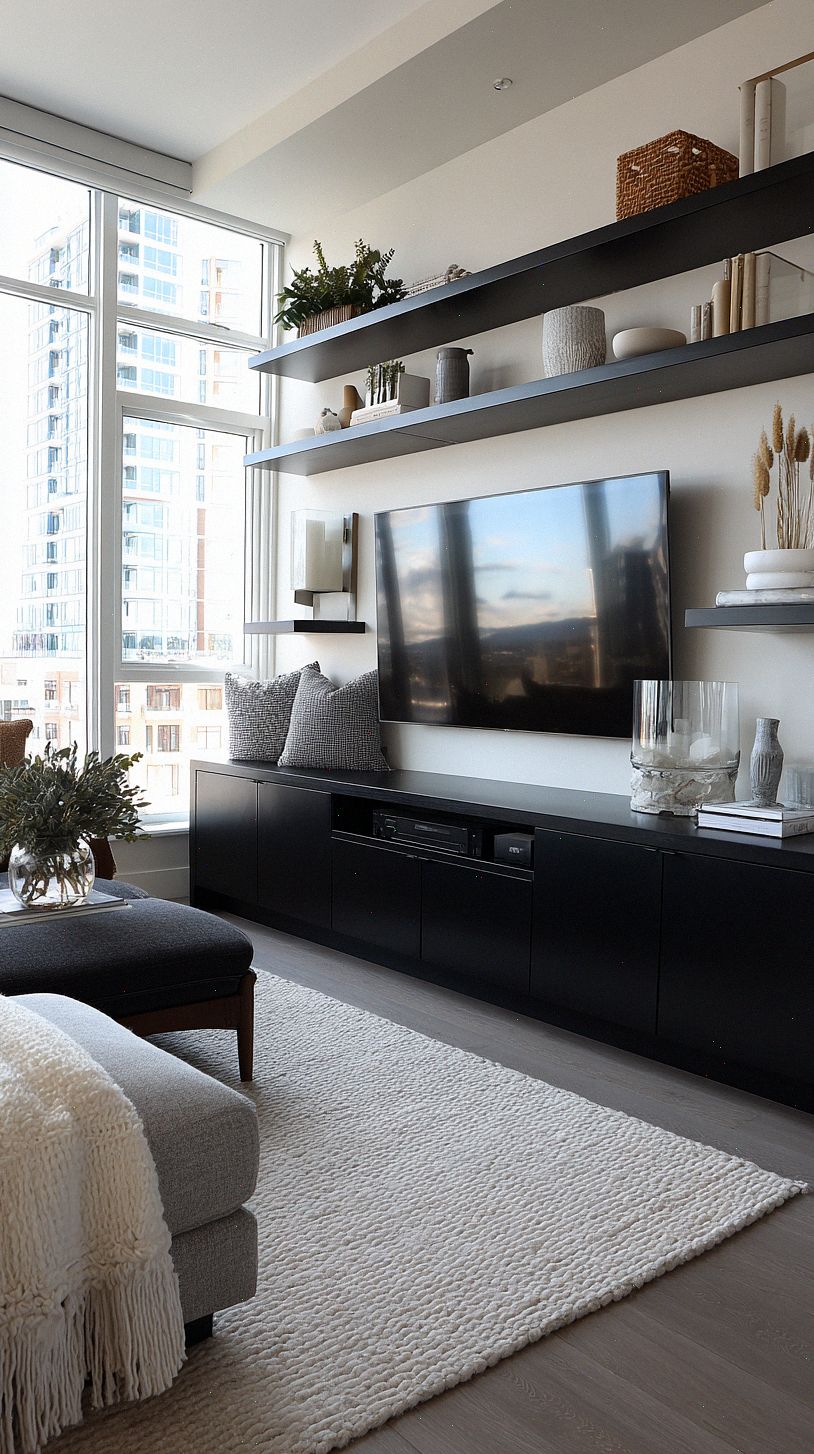
A floating console gives you flexibility and a lighter visual footprint that helps smaller rooms breathe, and you can swap styles easily if your taste changes. Choose one with concealed drawers or a cable channel, keep styling to one or two accessories, and leave negative space around the TV to avoid a crowded appearance.
Concealed Storage and Smart Media Solutions
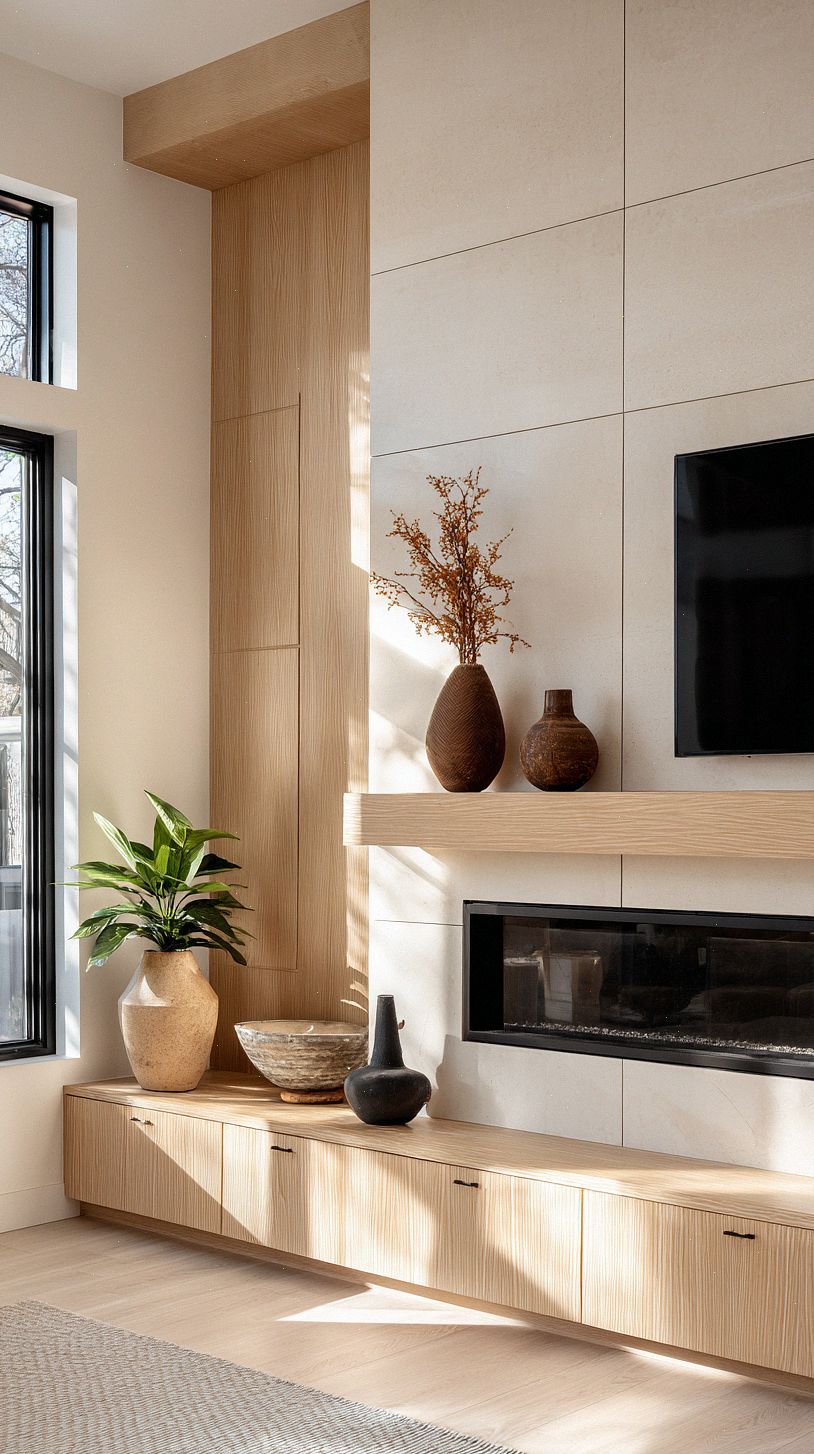
Keep the front of your TV wall clean by hiding gear behind flush cabinetry or in recessed niches with push-to-open doors. Run power and HDMI to in-wall plates, tuck cables into raceways, and use drawers or lift shelves to hide streaming boxes and game consoles while keeping them accessible and ventilated.
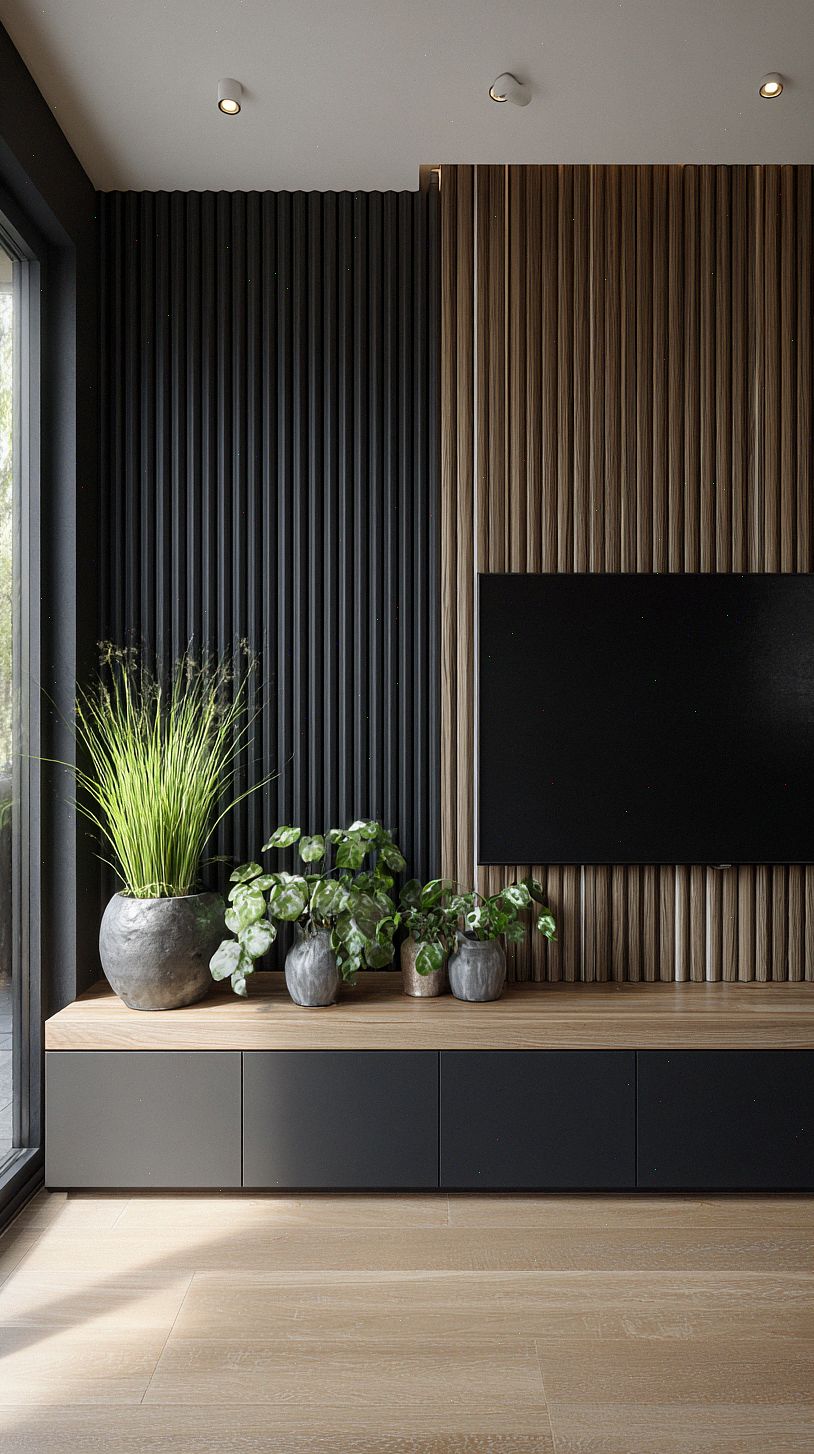
Make your tech work without shouting for attention by adding a discreet media hub with surge protection, IR extenders, or a small fan for airflow. Consider a soundbar mount or recessed shelf so speakers sit integrated and low-profile, and use voice control or a universal remote to avoid visual clutter from multiple remotes and gadgets.
Wall Treatments: Paint, Paneling, and Texture
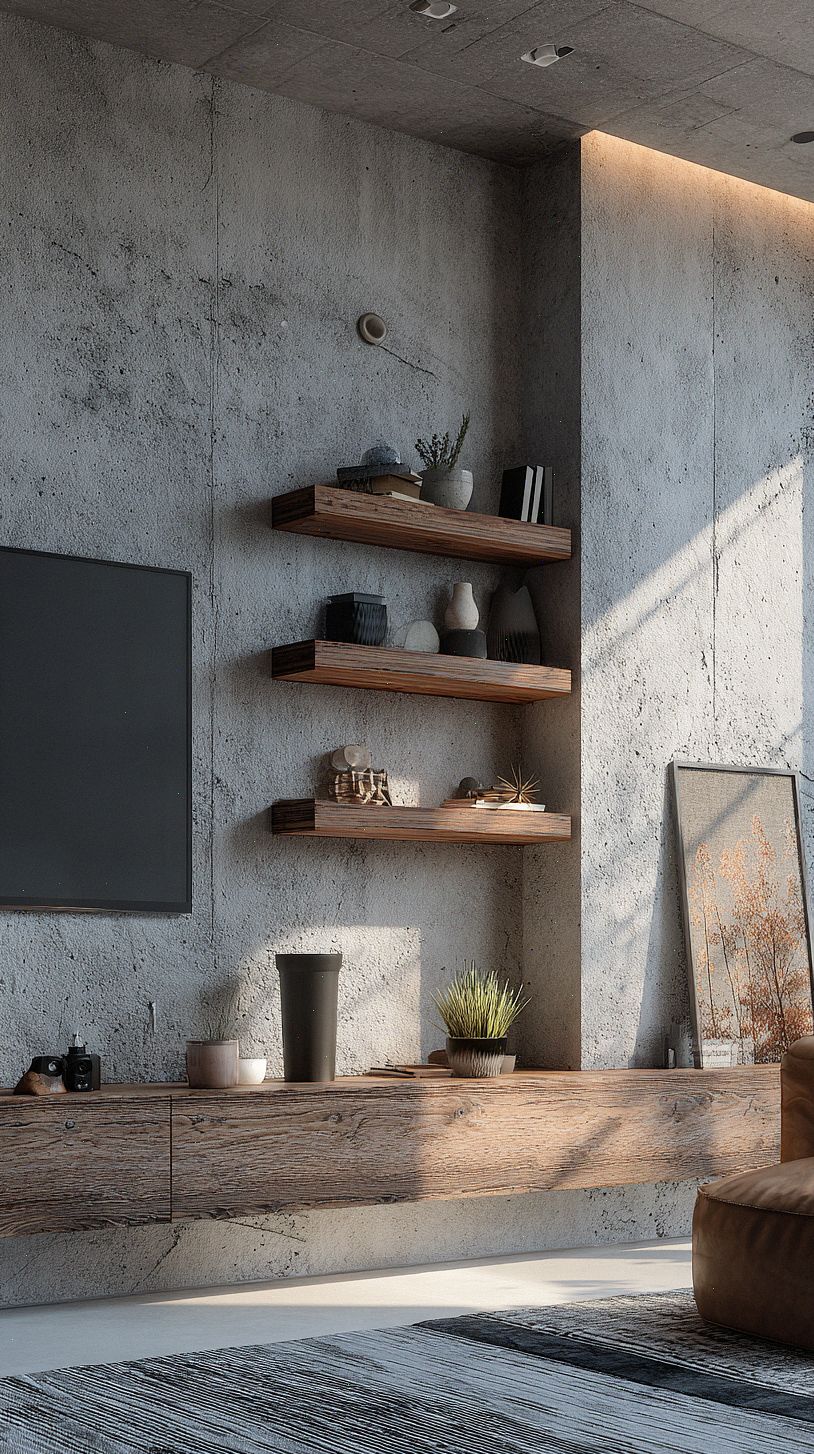
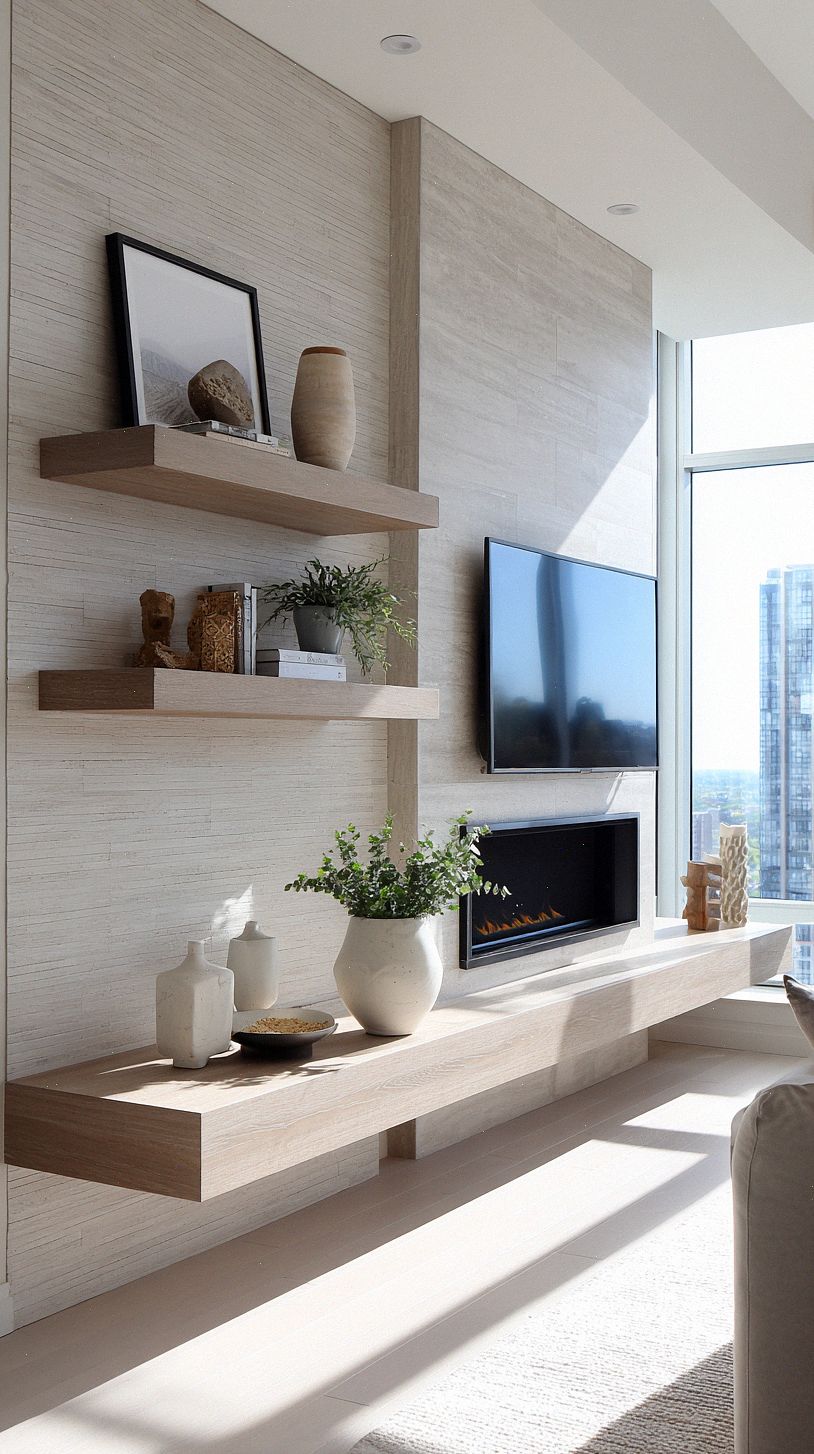
Pick a simple, intentional paint strategy so the TV becomes part of the wall instead of the focal fight for attention. A matte, neutral or slightly darker accent color behind the screen reduces glare and helps the TV read like part of the design; avoid busy wallpapers or high-contrast stripes that compete with the picture. If you want a bit more drama, go for a single-color feature wall rather than multiple hues so your space feels calm and cohesive.
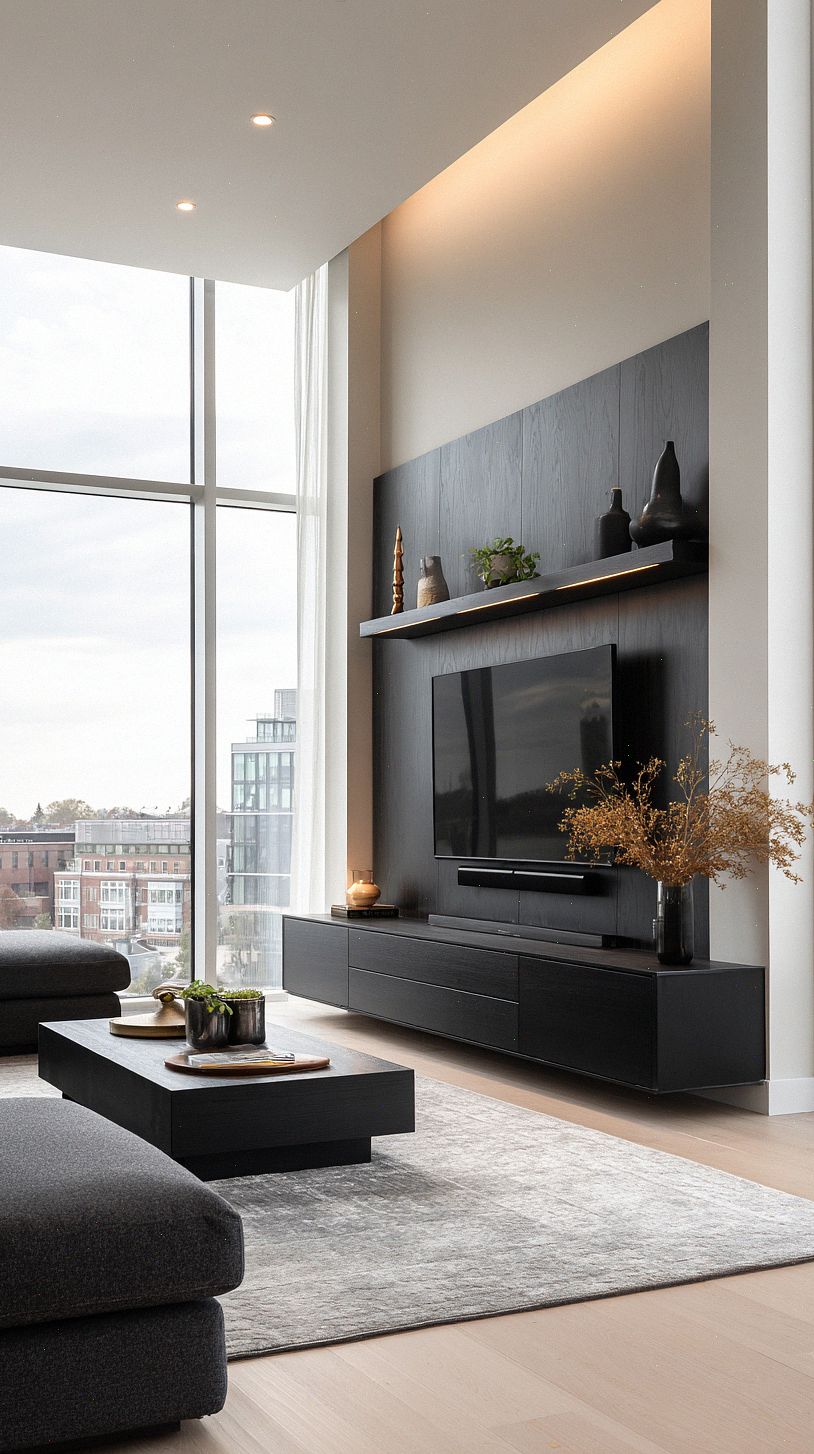
Paneling and texture can add warmth without clutter when you keep the scale and depth restrained. Thin wood slats, shallow recessed panels, or a subtle plaster finish give visual interest and can cleverly conceal cords or mounting hardware, but steer clear of deep, ornate moldings that eat into sightlines and make the wall feel heavy. Choose textures with a calm rhythm and match them to the rest of your room so everything reads as one elegant backdrop for the TV.
Minimal Shelving, Art, and Display Rules
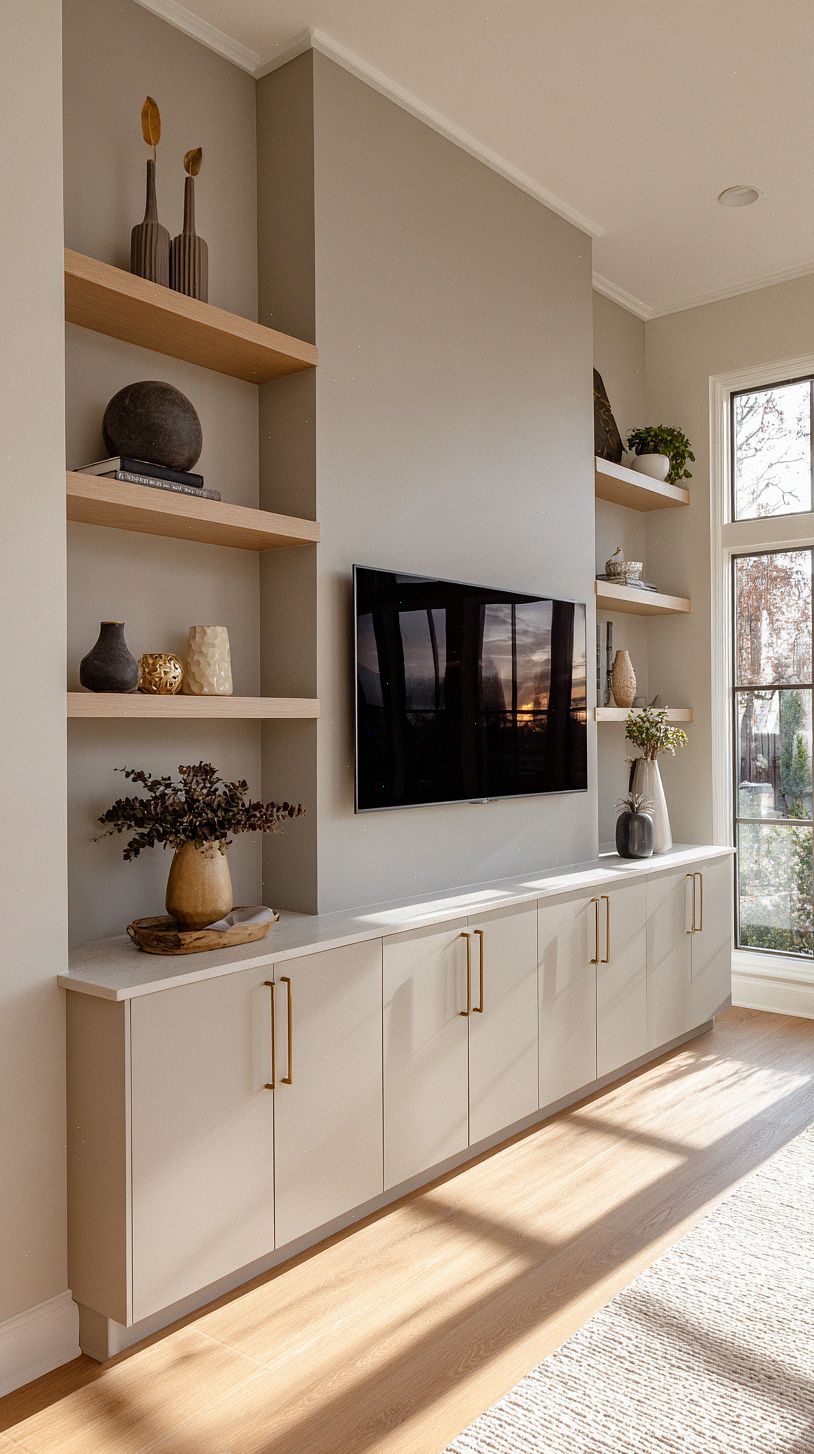
Keep shelves slim and few so your TV wall can breathe. Choose one or two floating shelves and limit items to three to five pieces per shelf, mixing heights and textures so nothing competes with the screen. Stick to similar tones or materials for a cohesive look, and leave empty space around the TV so the display reads as intentional, not cluttered.
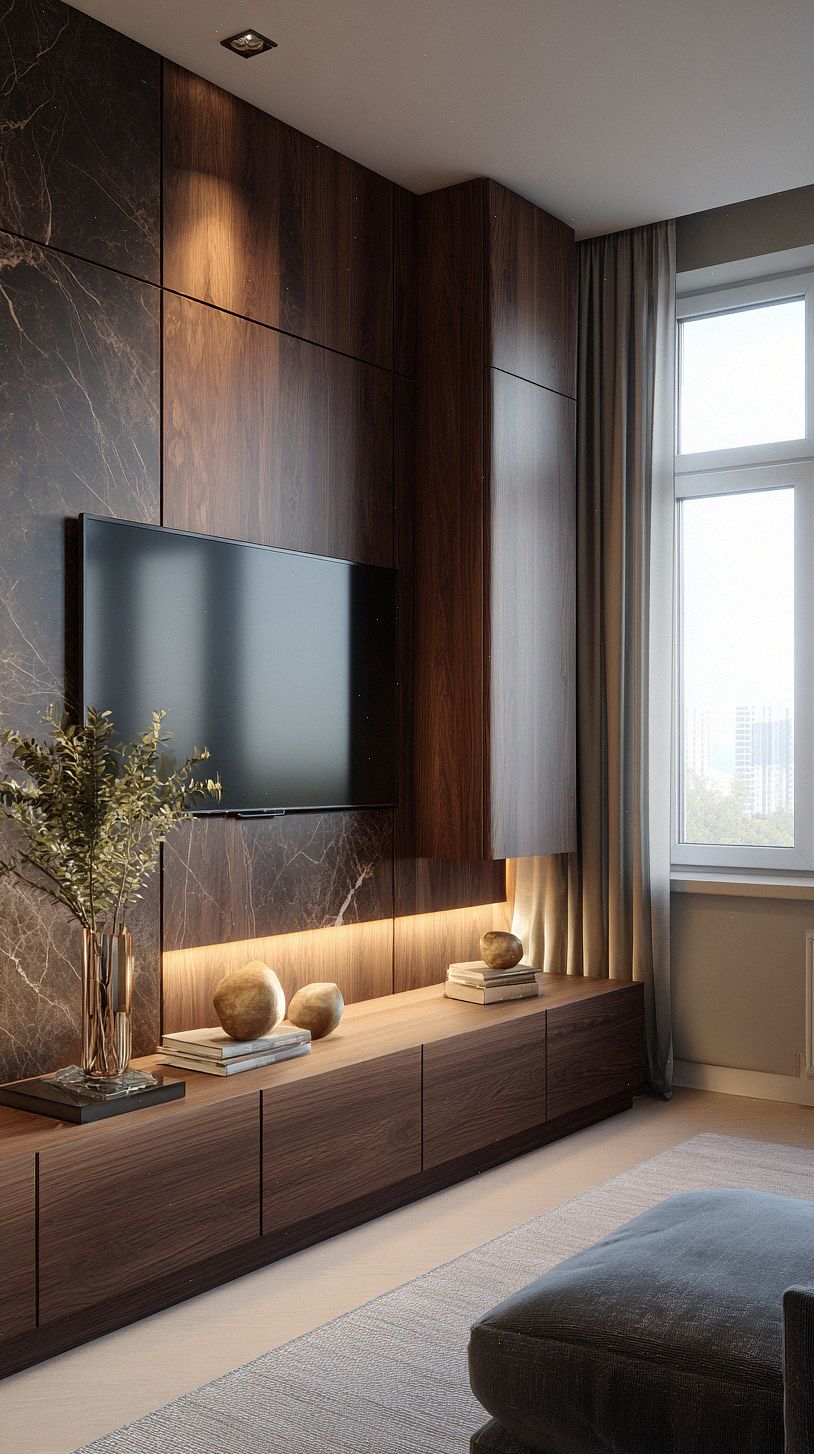
When you add art, pick one anchor piece or a simple gallery arrangement with consistent frames and spacing at eye level. Group objects in odd numbers and vary scale so the eye moves without stopping, and rotate pieces seasonally to keep things fresh. Hide cables, corral remotes, and treat functional items as part of the styling so everything looks planned rather than piled.
Hide Cables and Organize Your Tech
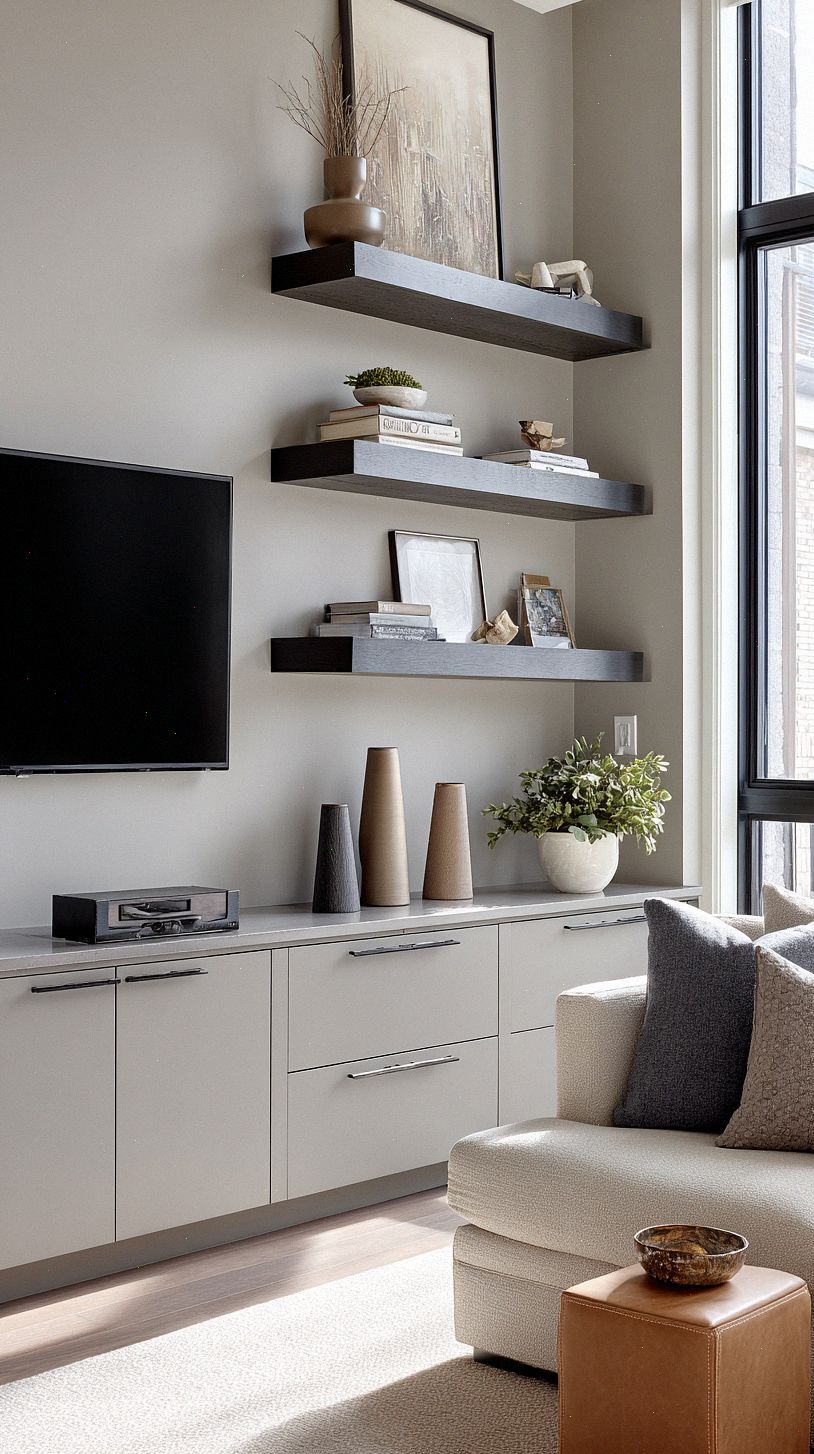
Keep the wall looking clean by getting your cables out of sight. If you can, run power and HDMI inside the wall with an in-wall power kit or a licensed electrician so cords vanish behind the TV. When in-wall isn’t an option, use paintable cord covers, adhesive cable clips, and Velcro straps to bundle lines neatly and secure a power strip to the back of your console to keep plugs off the floor. Label each cable so you can swap gear without a tangle.
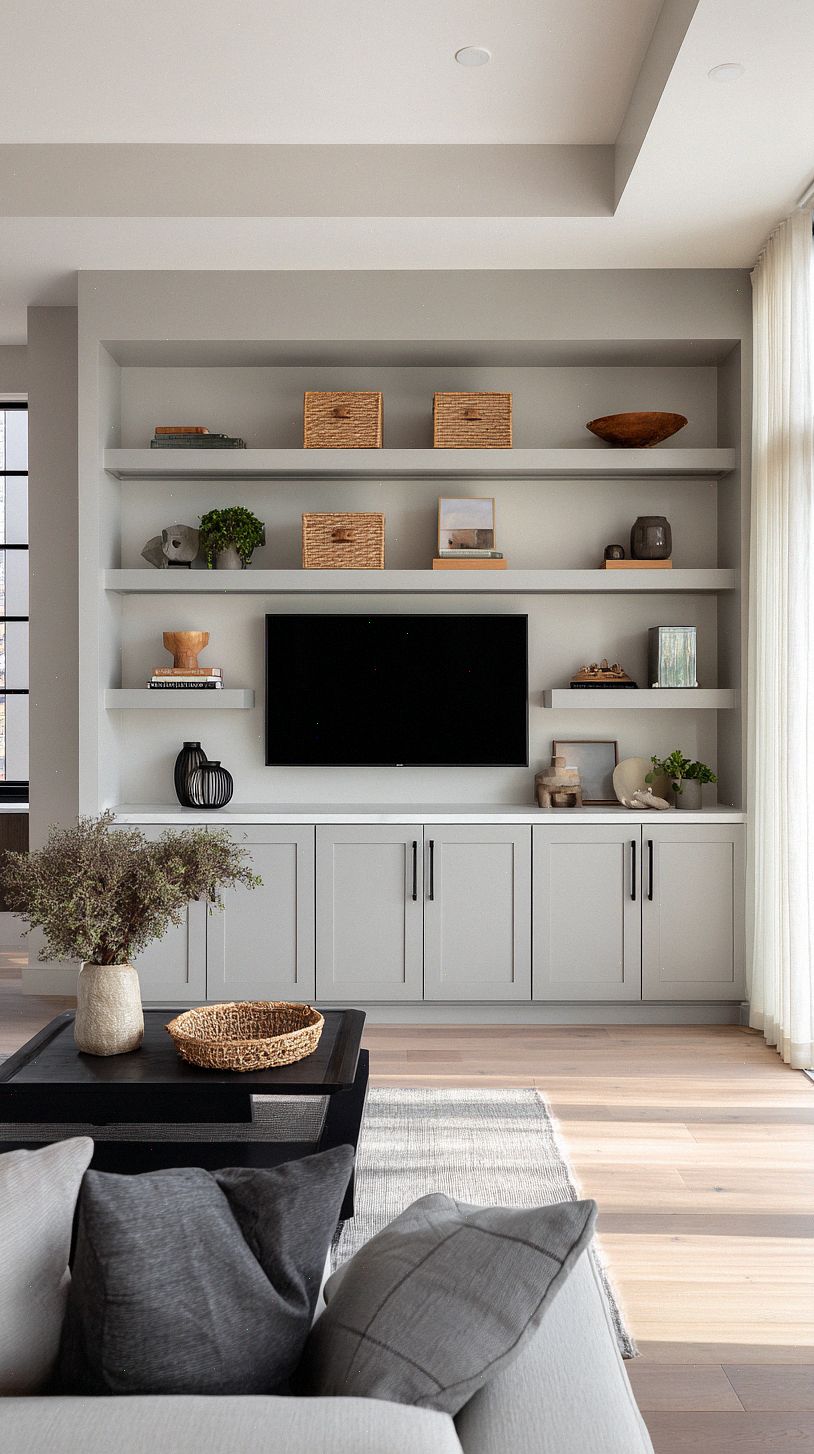
Organize the tech you do show by coralling adapters and routers inside a ventilated cabinet or a cable management box with cutouts for airflow. Mount streaming sticks behind the TV, use a single HDMI switch for multiple devices, and consider wireless speakers or a Bluetooth TV remote to cut down on extra boxes and cords. Keep small accessories in a drawer or basket so the whole setup reads tidy, not cluttered.
Lighting, Greenery, and Finishing Touches
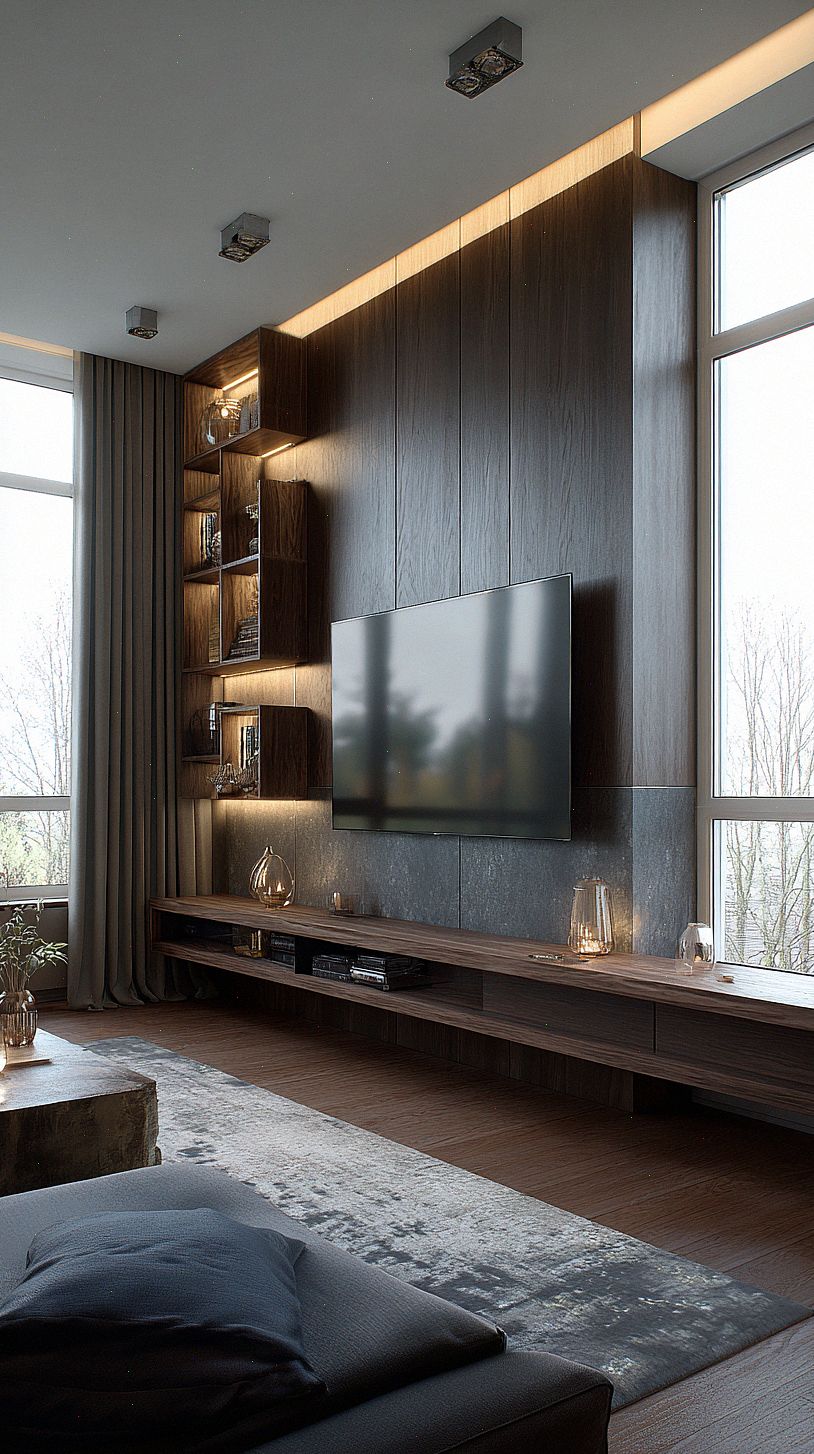
Layer your lighting so your TV wall feels intentional, not like an exhibit. Use soft ambient light from a floor lamp or wall sconces to reduce screen glare, add subtle LED bias lighting behind the TV for a cozy glow, and pick one spotlight or picture light to highlight a plant or piece of art. Bring in a single statement plant, like a fiddle leaf fig or tall snake plant, and a couple of low-profile succulents so you get greenery without a cluttered look.
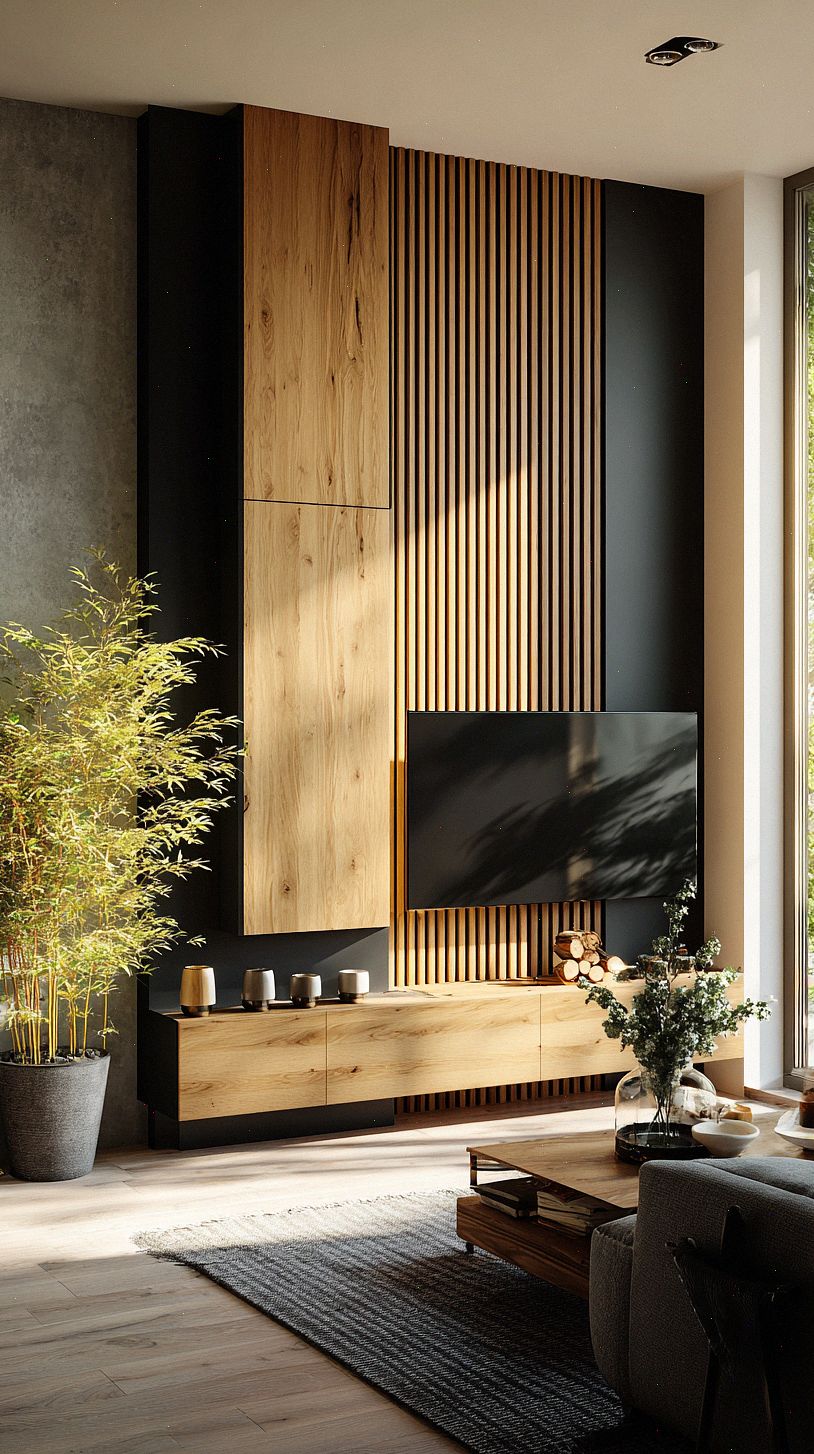
For finishing touches, curate just a few pieces that echo your color palette and textures, then leave plenty of negative space around them. Hide cables, keep remotes in a small dish or box, and choose one large artwork or a neatly spaced mini-gallery instead of lots of tiny frames. A textured throw or a metallic accent in small doses will add warmth and polish without overcrowding your TV wall.
Styling Tips, Common Mistakes, and Maintenance
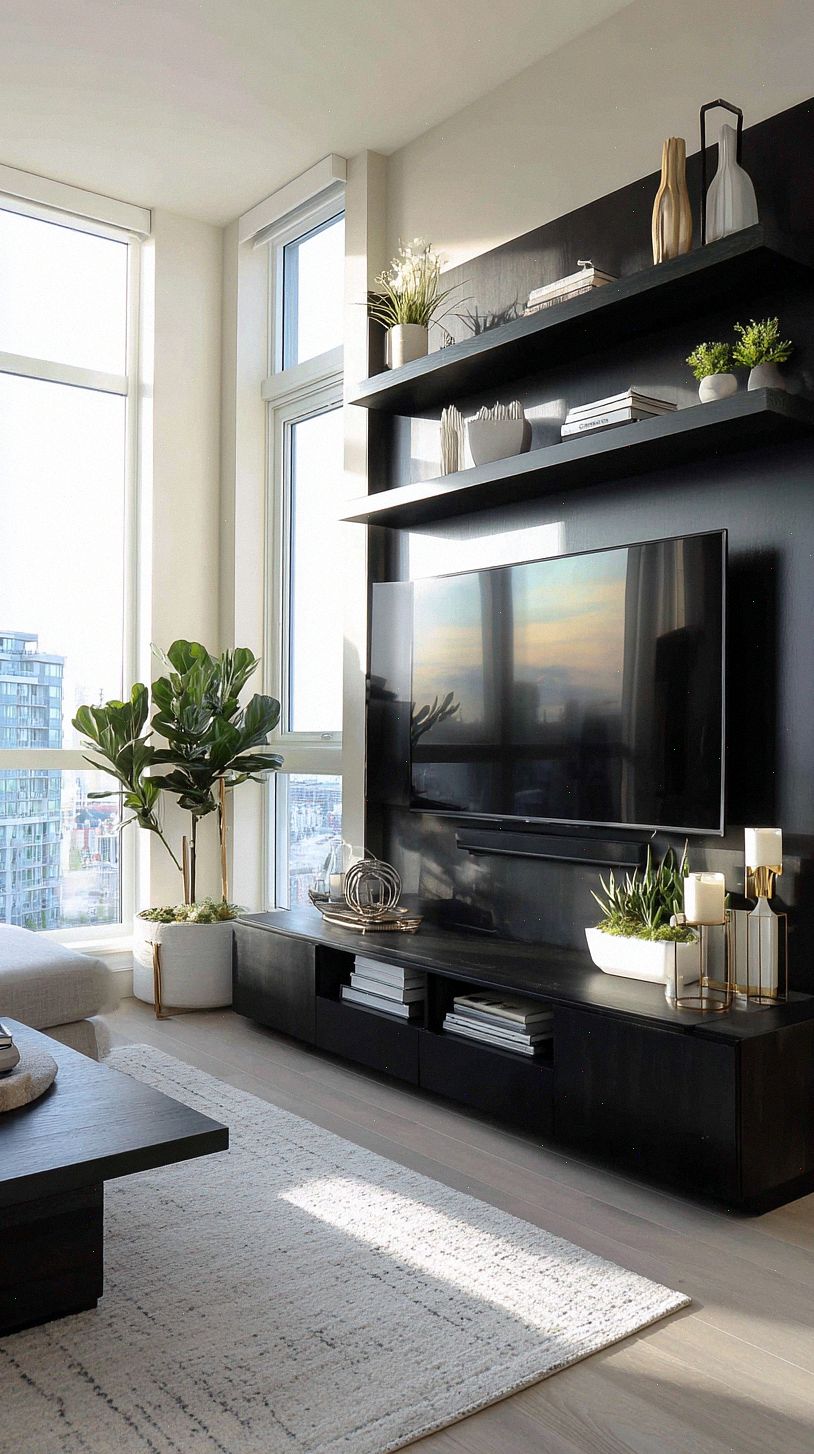
Choose a few meaningful pieces to frame the TV and keep everything balanced and intentional. Think of scales and repetition: matching frames, a couple of shelves, or mirrored shapes on either side will give your wall rhythm without overcrowding it. Avoid the mistake of filling every inch; empty space is a design tool. Also steer clear of too many small decorative items that read as clutter from across the room.
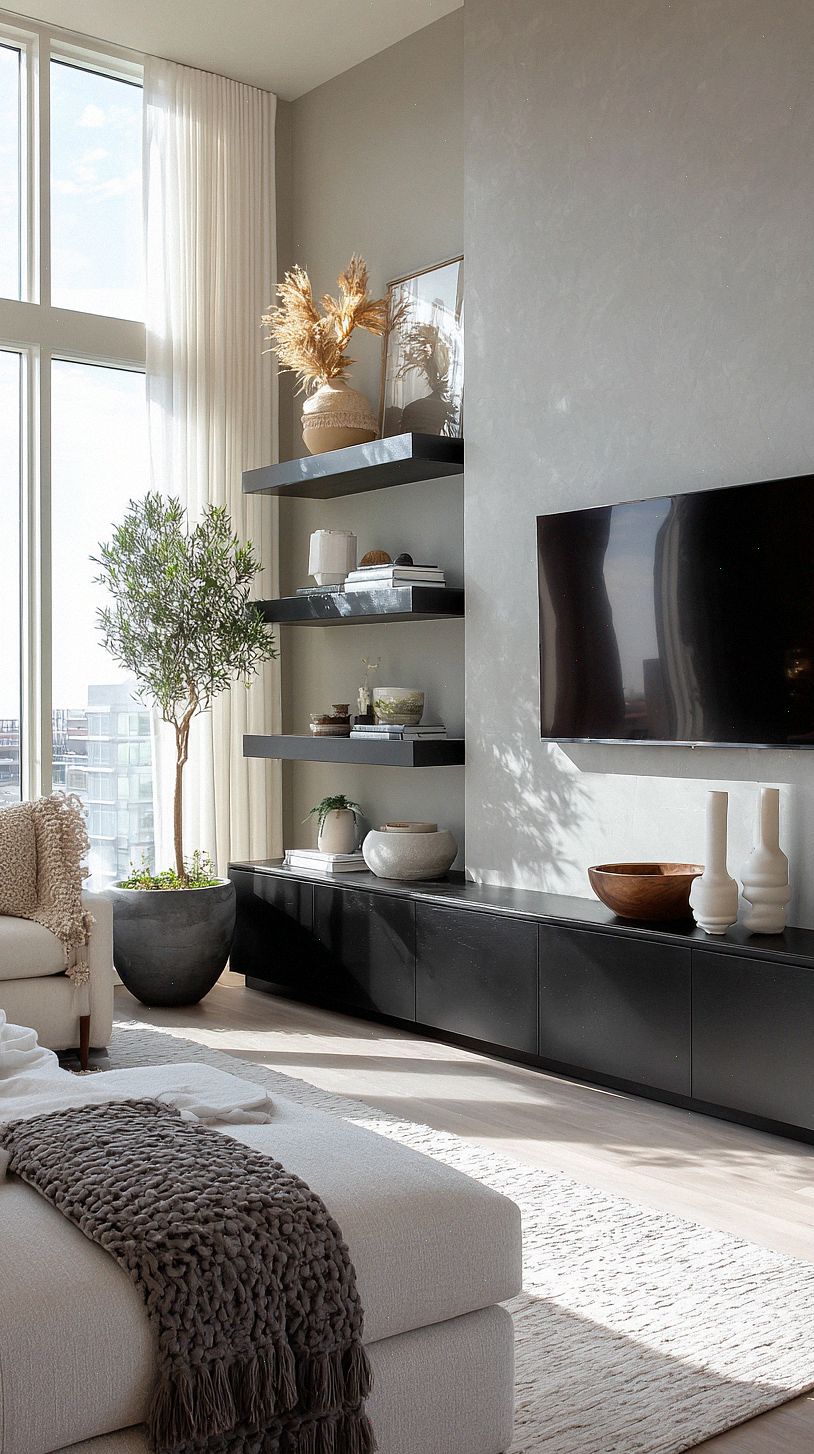
For upkeep, stick to simple routines like dusting shelves weekly and wiping the screen with a microfiber cloth after you turn off the TV. Rotate decor seasonally so the wall feels fresh without adding more items, and keep cords hidden or bundled to maintain that clean look. If something starts to feel busy, remove one item and see how much lighter the space feels.